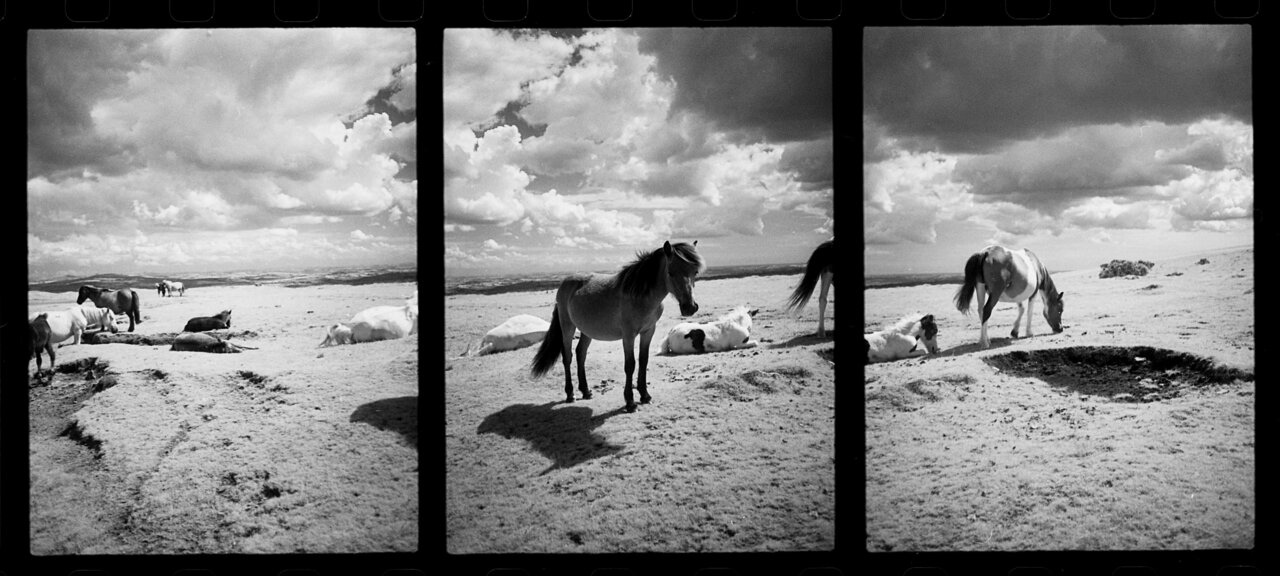
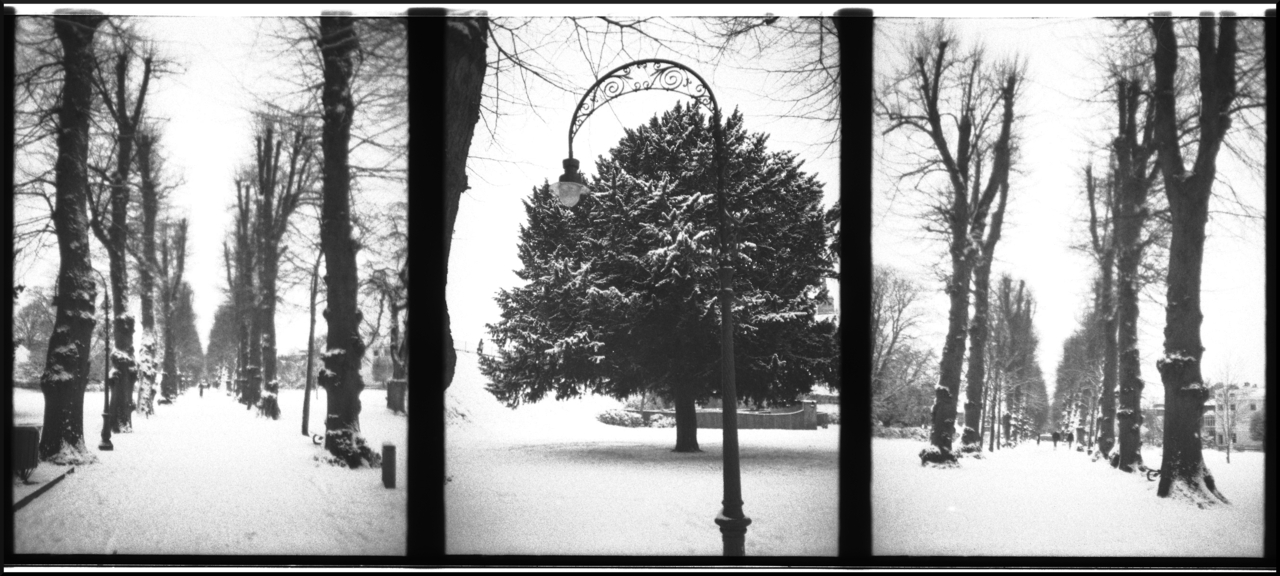
Scratched Emulsion

Welcome to Scratched Emulsion. This site is a collection of experimental, unusual, and avant-garde techniques in the modern (2020s) analogue photography darkroom, including everything from traditional alternative processes to unique one-off experiments.

This site is intended to provide an overview of what non-standard visuals can be achieved in the darkroom—beyond the perfect photo-realistic silver-halide print. Each section contains a quick summary, links to practitioners and instructions, and a few examples. You can find details about the hows, the whys, and the histories elsewhere.

Scratched Emulsion exists because—at the time of its creation (2026)—there were millions of pages about individual darkroom techniques and experiments scattered around the internet, but no good resource for seeing all of the possibilities at a glance.

Although many of these techniques are also suitable for hybrid workflows, this site is specifically about purely analogue methods. The focus is on darkroom printing, but everything from in-camera techniques to presentation designs are permitted if they fit the theme.

If you know of a technique or process that should be added, please drop an e-mail to <>. Personal experiments welcome if they're sufficiently different or more specific than what is listed here. If you would like to include one of your images, please send it along with a copyright license grant.

All images below reproduced according to their published license or with written permission.
table of contents

ambrotype (alternative photo process)

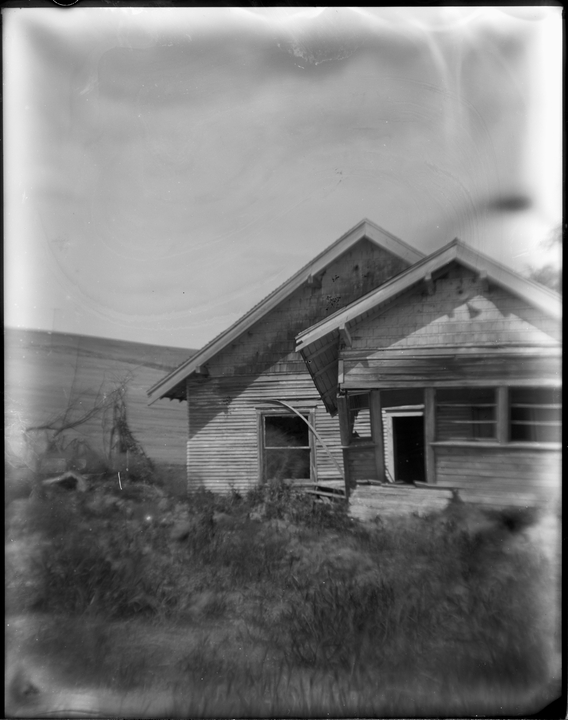
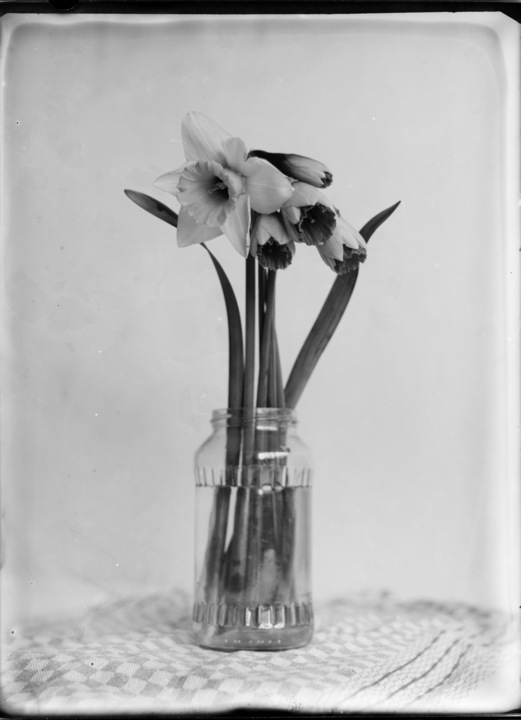
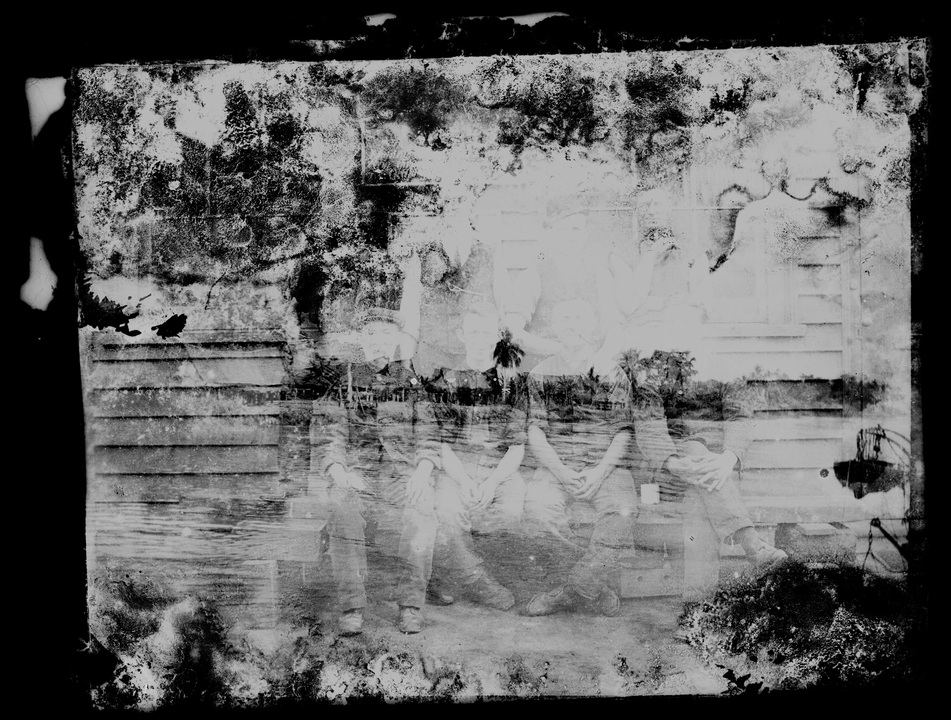
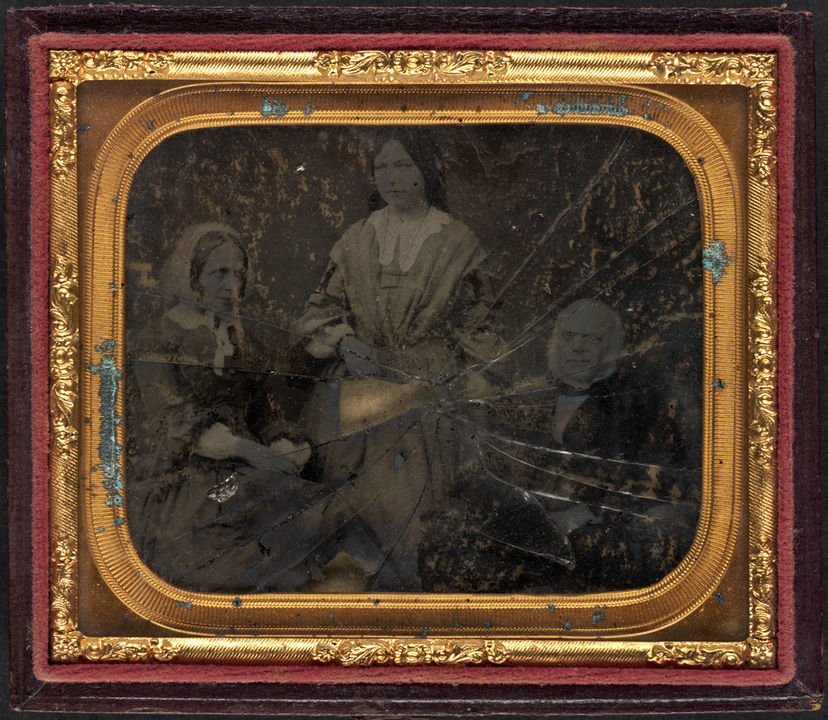
Ambrotype are direct-positive photographs shot on glass plates dipped in a wet collodion silver emulsion and shot while wet. It chemically produces a mild negative image on the surface, which appears as a grey-toned positive image when viewed with a dark background due to the mildly grey silver and strongly black background. The glass can optionally be coated in black varnish in advance.

Ambrotype is one of the wet collodion emulsion processes. In modern times, simply saying "wet-collodion process" or "wet-plate photography" implies an ambrotype. The related tintype is also a wet collodion process.

Charles Guerin WET COLLODION 013 Public Domain (CC0)

tintype (alternative photo process)

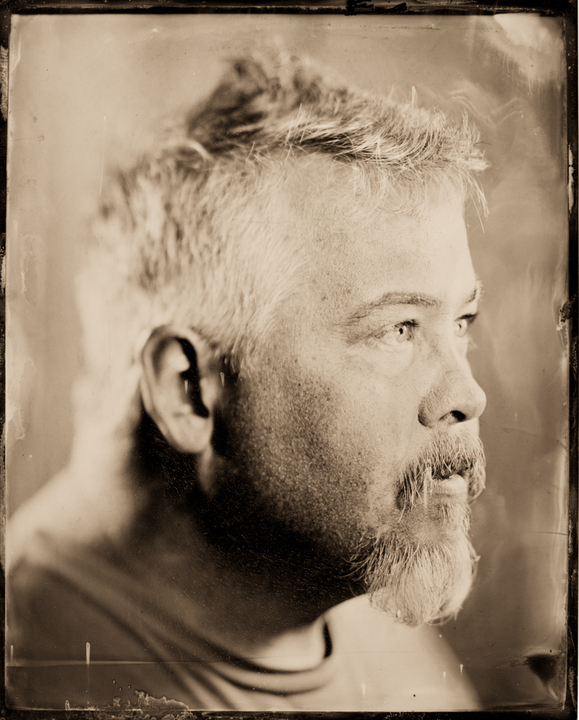
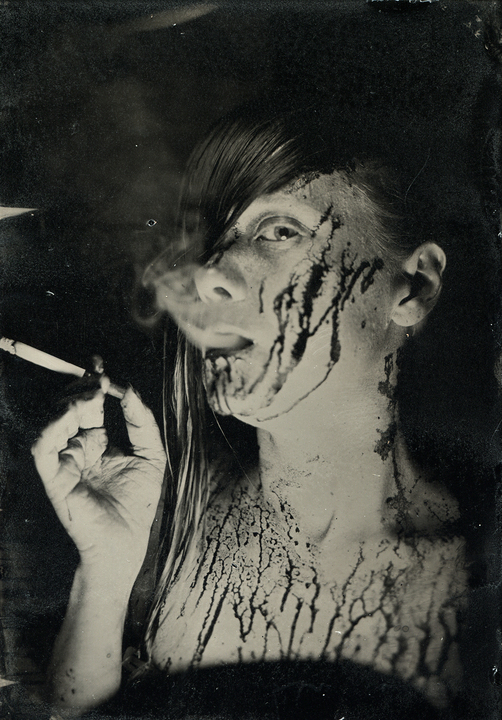
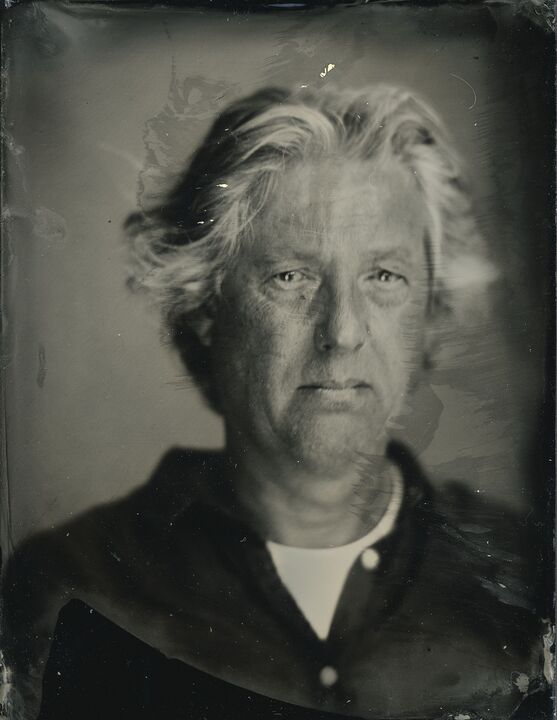
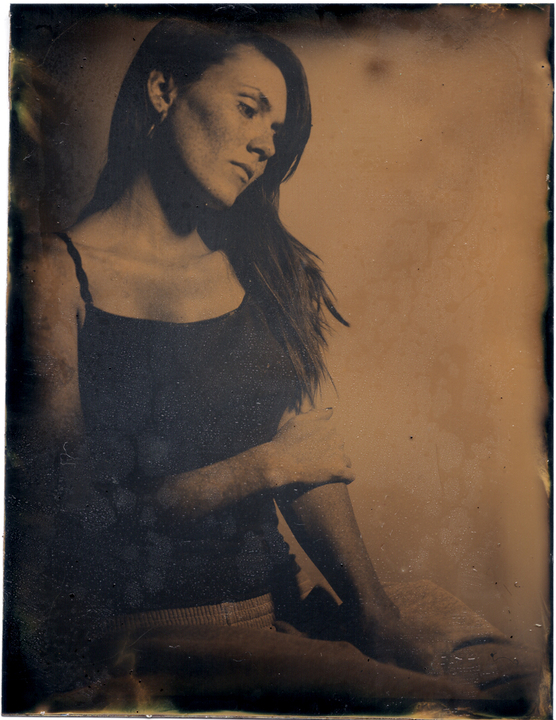
Tintypes are direct-positive photographs shot and developed on a sheet of metal with a dark coating and a wet collodion silver emulsion. They are related to and practically equivalent to ambrotypes.
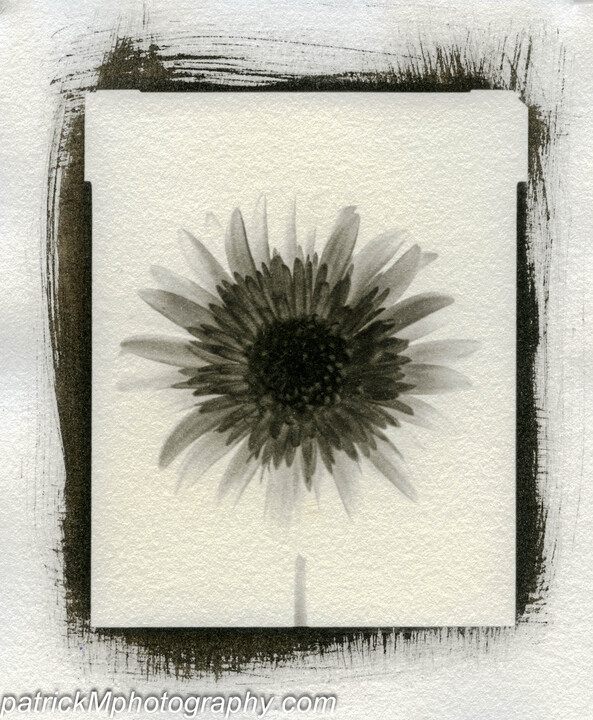
Jeremiah Flynn Jon Johns FlynnType CC BY-NC 2.0
fPat Murray TinType029 CC BY-NC-SA 2.0
Mark Dries Me on Tintype CC BY-NC-ND 2.0

dry-plate collodion (alternative photo process)

Both ambrotypes and tintypes can be produced with an alternative collodion silver emulsion consisting of gelatin or albumen (egg white), which can be pre-coated and allowed to dry. The emulsion tends to be significantly slower than the wet-plate variant.

anthotype (alternative photo process)

Anthotypes are contact-printed images with emulsions produced directly from crushed plant material (generally flowers) of particular light-sensitive plants. Light-sensitive emulsions can be made from beetroot juice, sour cherry juice, turmeric, violet, seabuckthorn, red chili, and much more. Different plant material combined with different solvents (ex: vodka, isopropyl alcohol) produce variously colored emulsions.

A direct image is formed from exposure to a powerful UV source (i.e. the sun) for several hours to days, which can be further chemically developed or preserved. Anthotypes are considered unstable, and degrade over time.

phytograms (alternative photo process)

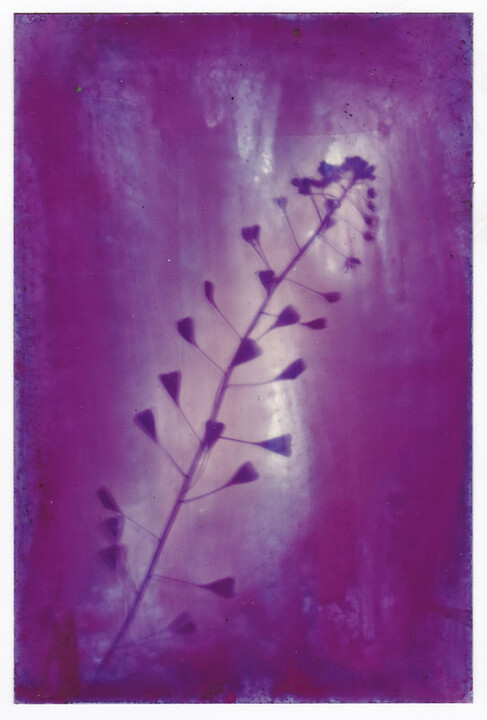
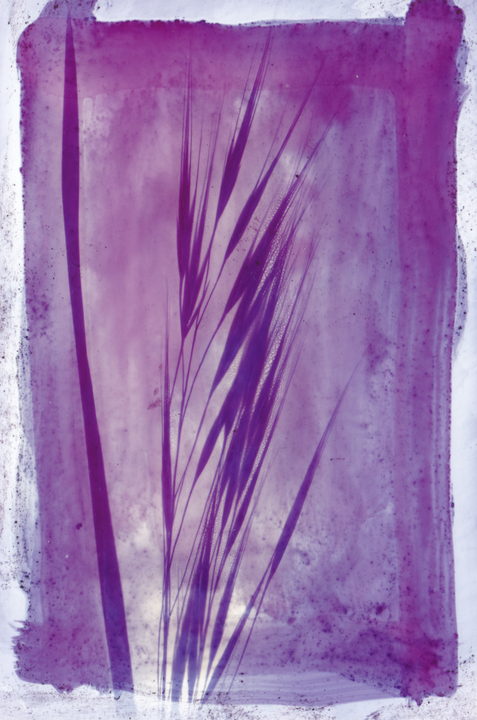
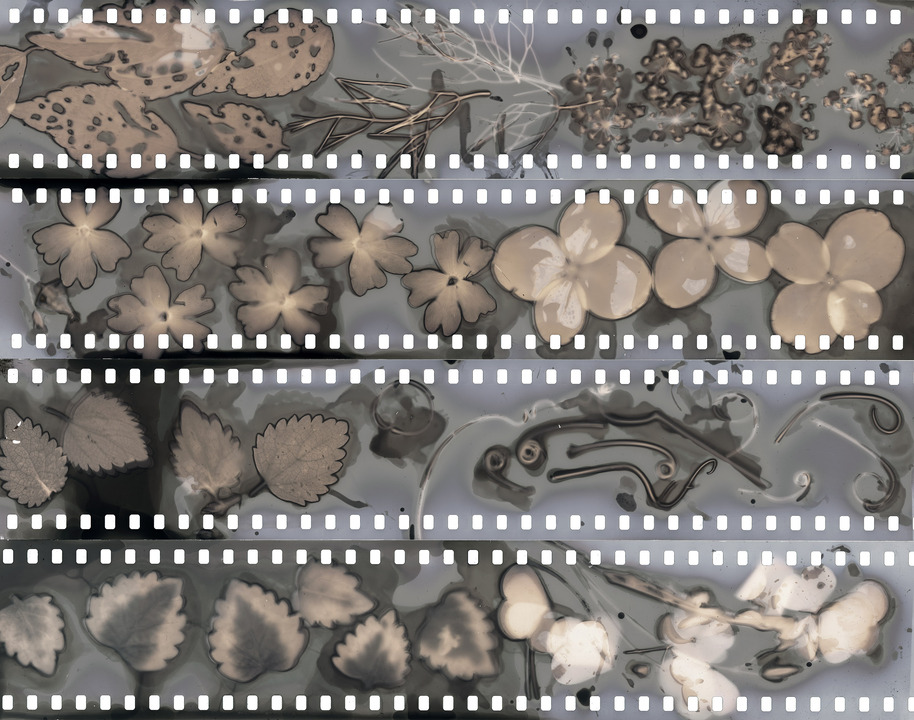
Phytograms are contact-printed plant material, like leaves or flower petals, using the phenols in the plants as the developing agent. The leaves are dipped in a vitamin C and washing soda solution, effectively producing the same recipe as caffenol, but within the plant itself. This can be done on film or paper, in daylight.

References:
Tom Hart Phytogram CC BY 2.0

chemigrams (alternative photo process)

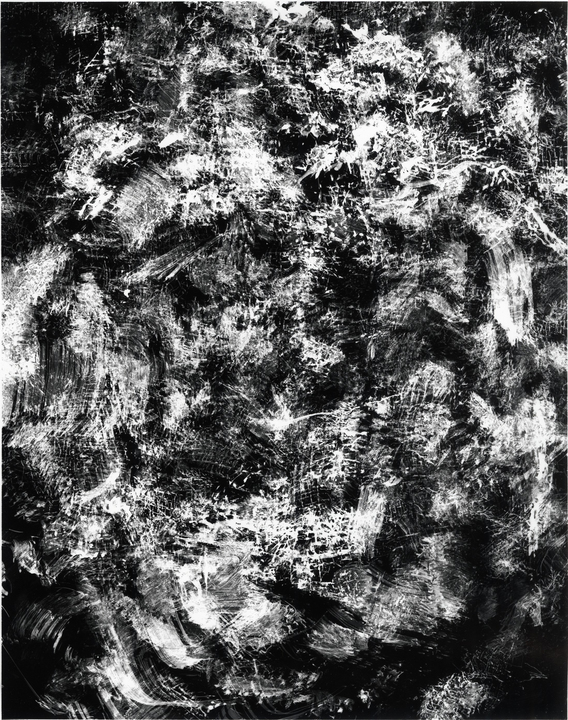
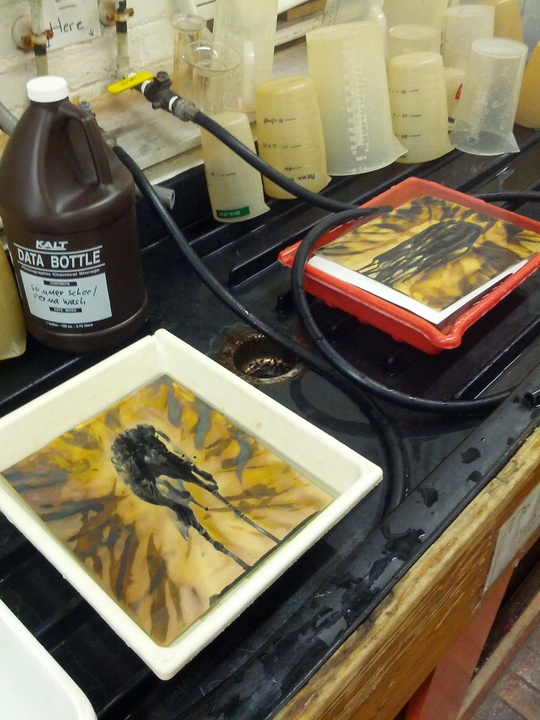
Chemigrams are camera-less, abstract "paintings" made directly on photographic paper by alternately applying developer and fixer to control the development, and using "resists"—chemical or physical additives like wax, oil, varnish, butter, glue, or tape—to roughly control which parts of the paper are exposed and developed. The artist has great influence, but the final result is unpredictable. Like film soup, the resists are often a combination of household chemicals and items.

photograms (alternative photo process)

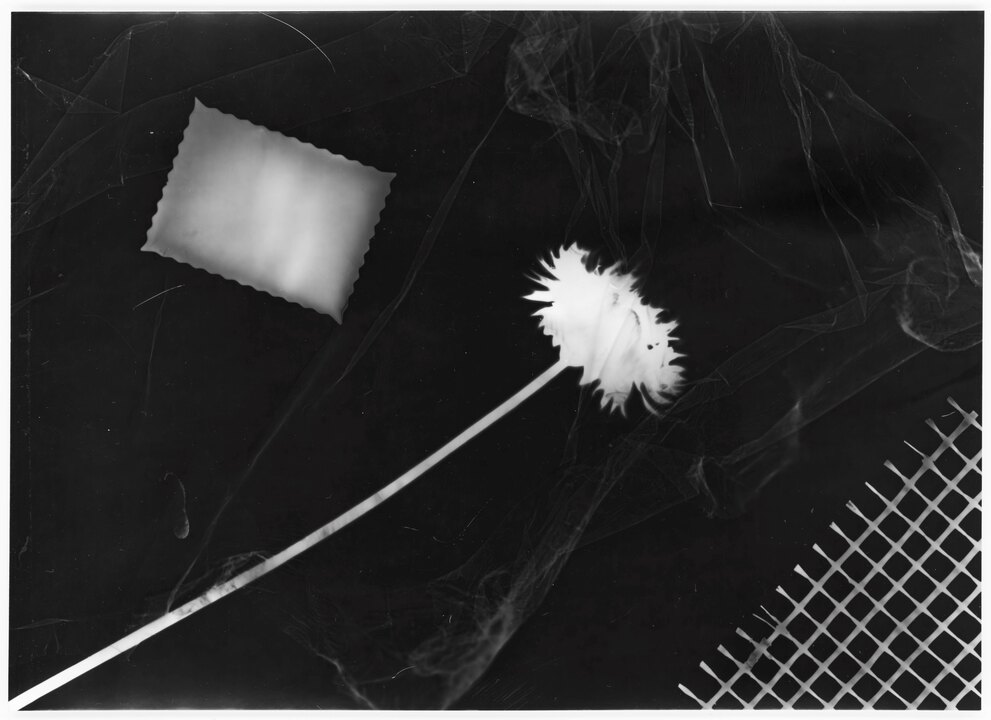
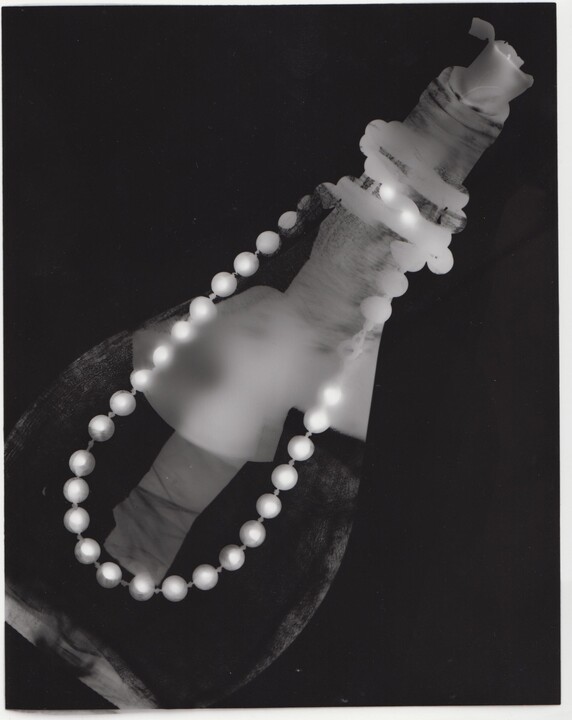
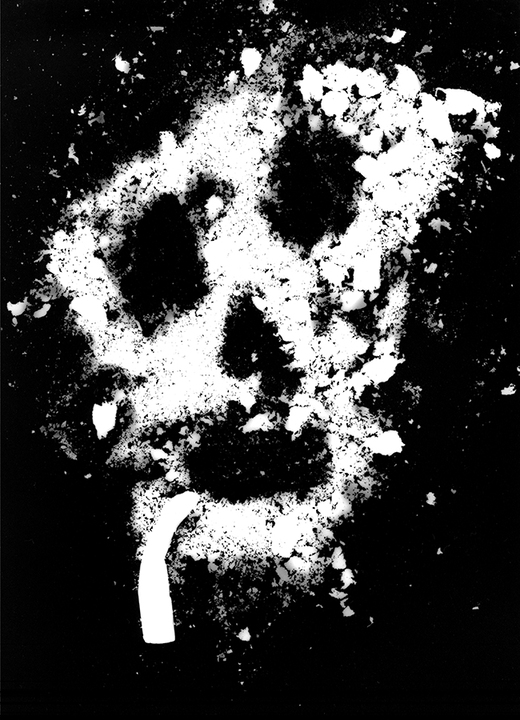
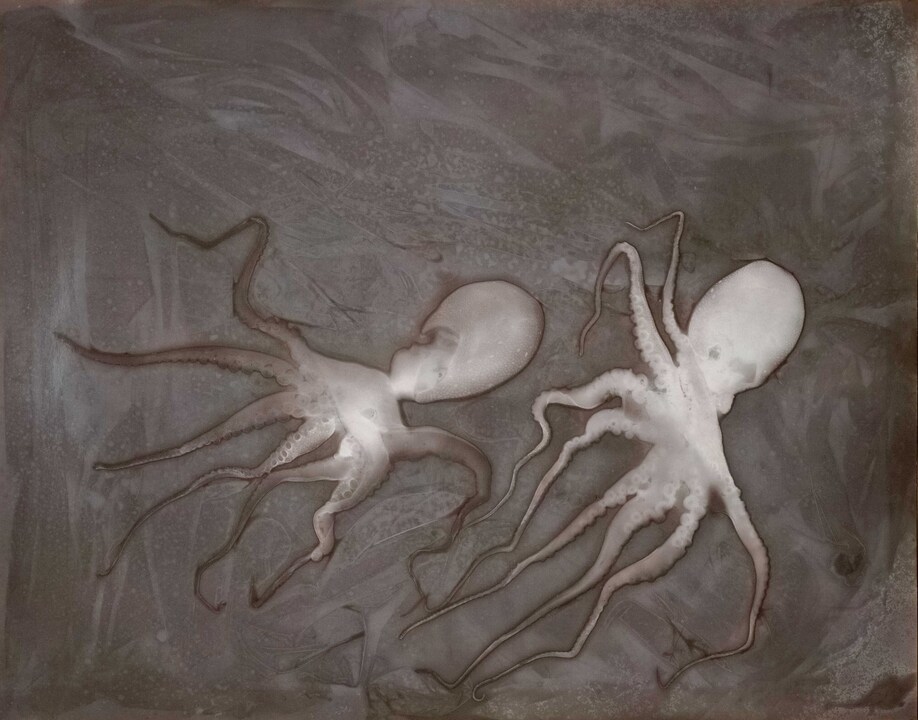
Photograms are camera-less photographic images captured by placing items directly on film or photographic paper. Opaque items fully block exposure, while transparent and translucent items create more varied texture. Complex shadows can develop as well, depending on the size of the object and light source.

lumen prints (alternative photo process)

Similar to photograms, lumen prints are camera-less images captured by placing objects directly on the light-sensitive emulsion, but exposed to strong UV light for a long period of time rather than traditional exposure and development. UV-exposed photo paper can develop bright, pastel colors as they develop out.

watergrams (alternative photo process)

Watergrams are photograms with liquid (typically water) as the object on the photo paper. The water is agitated during exposure to make waves, ripples, splashes, or bubbles, which cast shadows on the final print.

handmade negatives (alternative photo process)

Handmade negatives are non-photographic negatives produced by manually applying or removing material to or from film or other transparent plastic, producing a translucent object that can be used in a negative carrier or contact printed. Handmade textures combined with sandwiching negatives is an option.
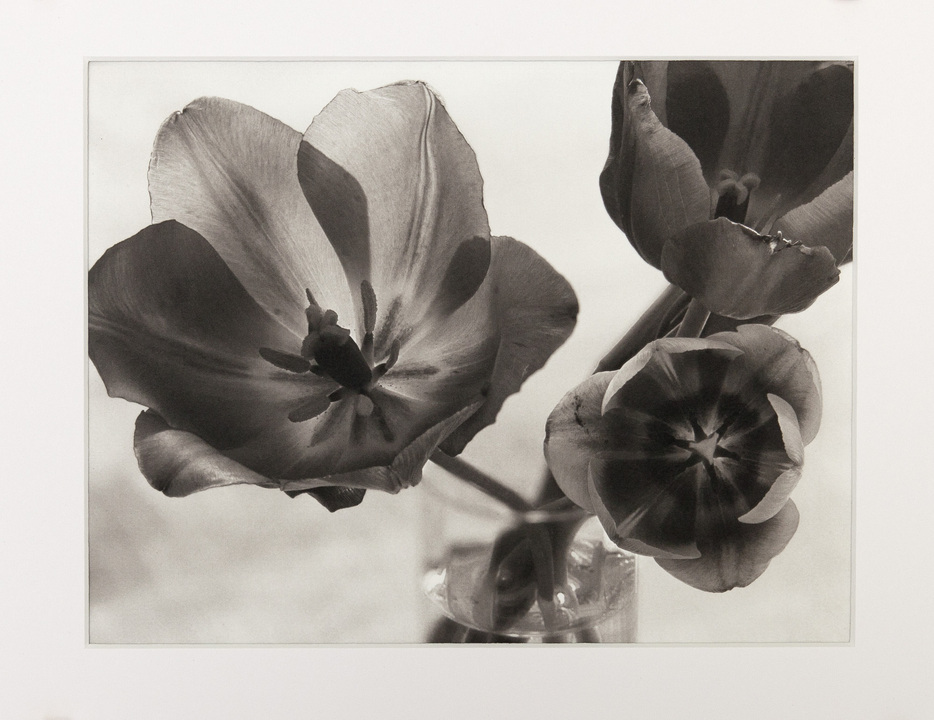
lith print (alternative print process)

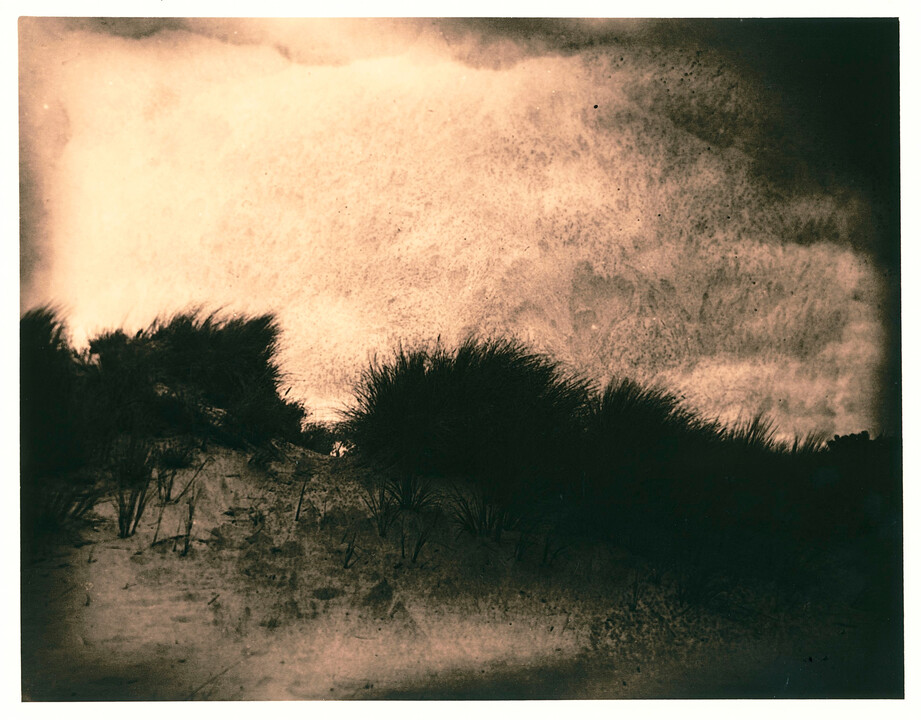
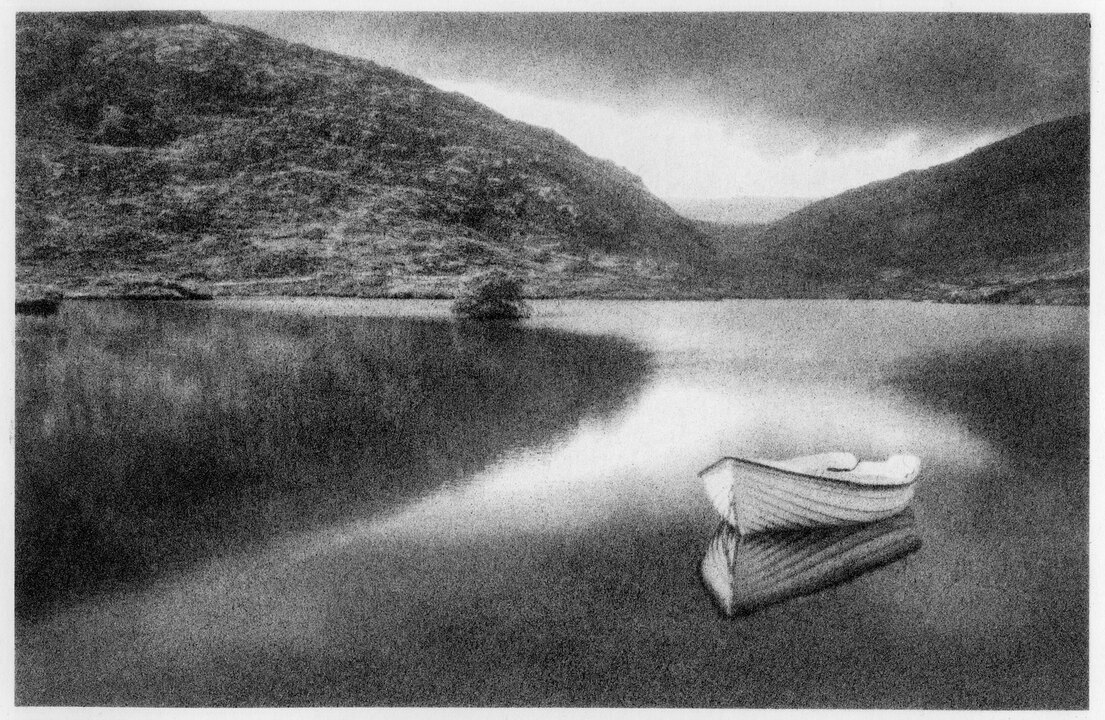
A lith print is an alternative print development method using additional formaldehyde in the developer solution to trigger "infectious development", meaning the tones develop exponentially faster as they darken. It gives different tonality and contrast than can be achieved with normal paper developer. The behavior depends on the paper it is printed on, with old bromide-based papers being particularly well-suited.

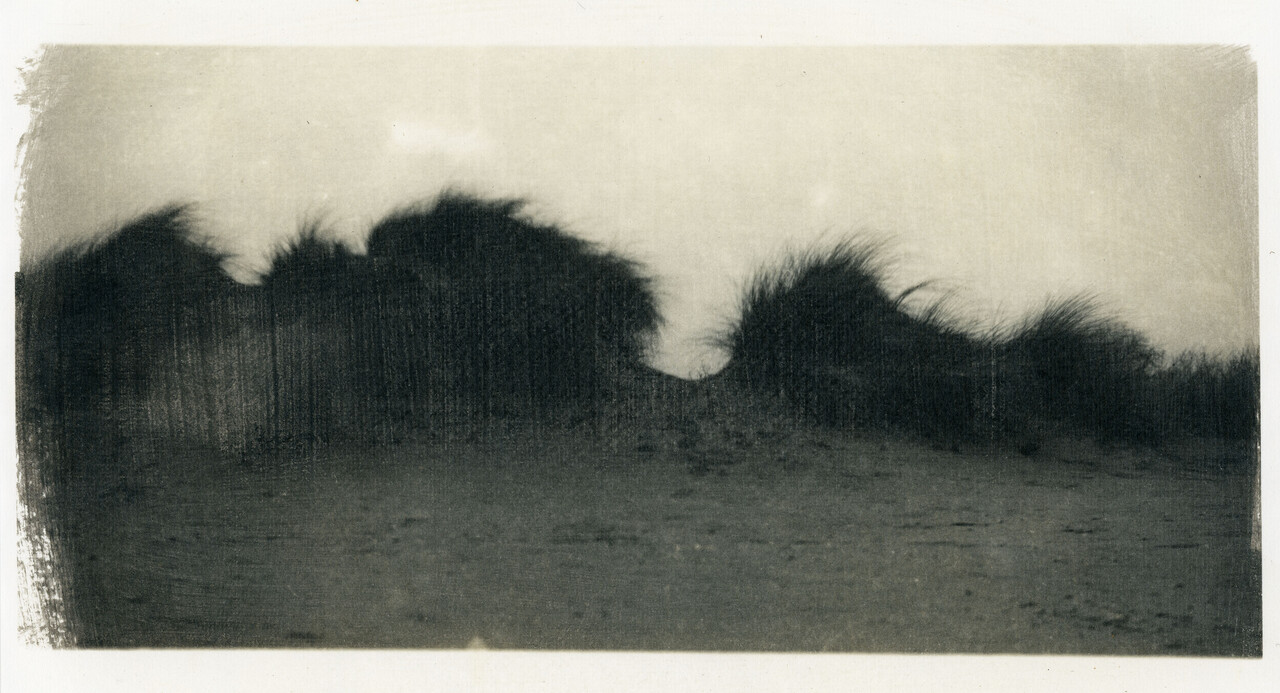
Mark Dries Dune (reprise) CC BY-NC-ND 2.0
Mark Dries Tree in mist CC BY-NC-ND 2.0

oil print (alternative print process)

Oil prints are film negatives contact-printed on a paper sensitized with a dichromate (as opposed to silver halide), fixed, and then painted with dark oil paint. The paint sticks to the well-exposed areas, and washes away from the less-exposed ones. Prints have a unique combination of photorealism and painting-like texture. Bromoil is a similar technique that can be used with an enlarger.

Armand83 DSCF3044-copie CC BY-ND 2.0

bromoil (alternative print process)

A modified variant of oil prints, bromoil involves first enlarging a negative onto a standard silver halide photographic paper, fixed, chemically bleached, and finally inked with oil paint.

cyanotype (alternative print process)

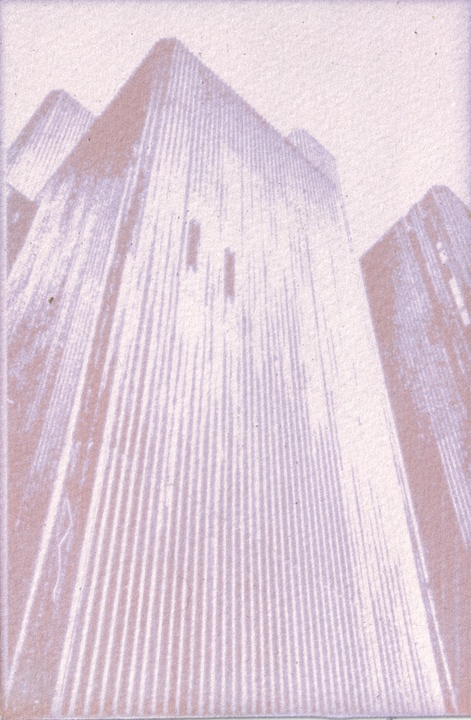
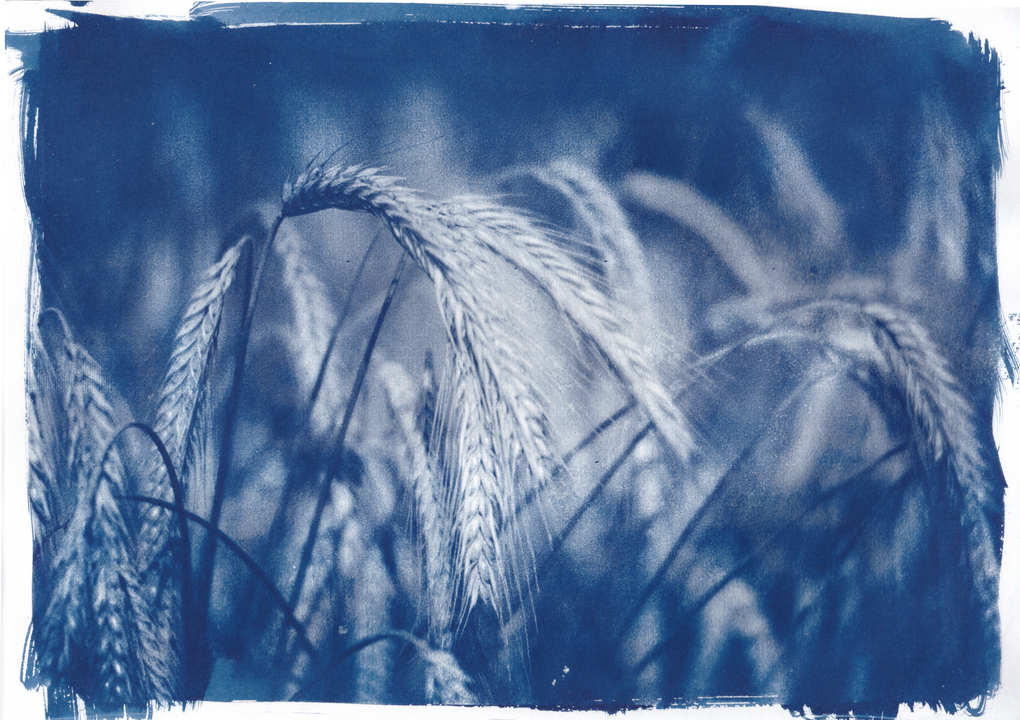
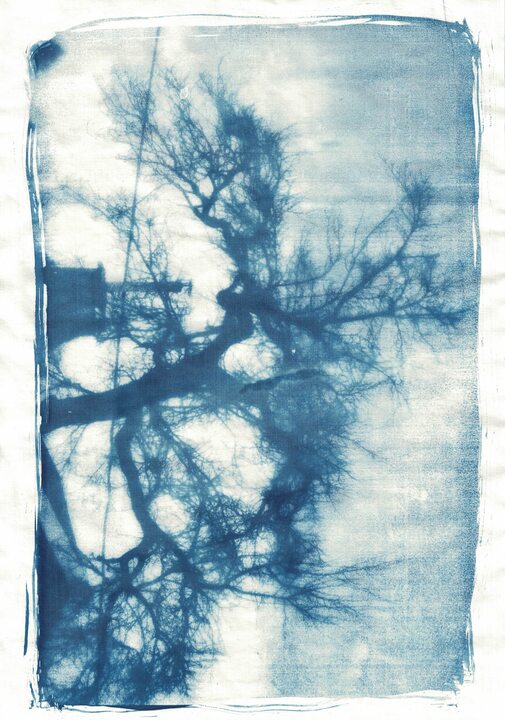
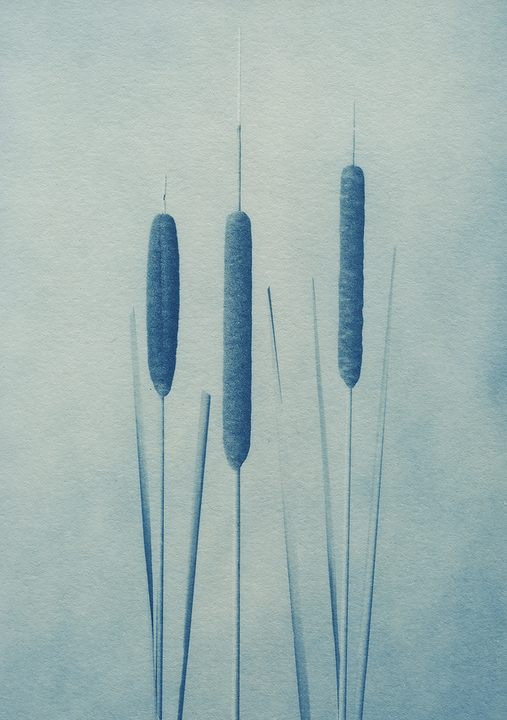
Cyanotypes are contact prints made on emulsions made from chemicals that deposit iron in response to UV light, and print to a bright, monochromatic blue. Toning after development allows obtaining a wide variety of mostly-pastel colors in the final print.

References:
Examples:
Elena Erda Way CC BY-NC-ND 2.0
Dan Sandersfeld Cattails CC BY-NC-ND 2.0

kallitype (alternative print process)

Kallitypes are UV contact-printed images similar to cyanotypes, but using an iron-silver emulsion (ferric oxalate), which produces a more traditional silver-toned image with high tonal range. Kallitypes are frequently toned with metallic salts—gold, platinum, palladium, or mercury—for both color and improved permanence.

van dyke brown (alternative print process)

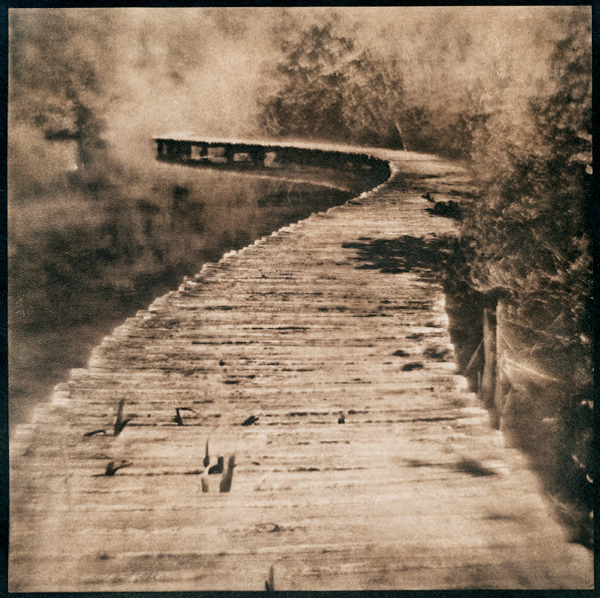
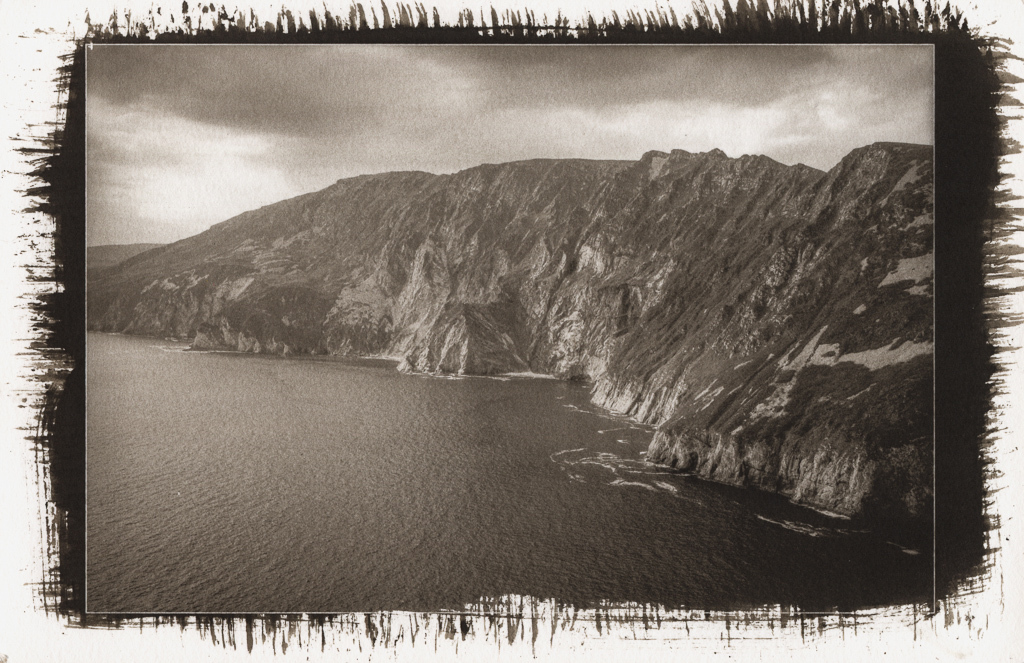
A UV-exposed contact-print process very similar to kallitypes, but using ferric ammonium citrate, which produces prints with a rich, deep brown tone. Van Dyke brown prints expose to completion, meaning they can be produced without a darkroom.

A modern derived process called argyrotype attains similar prints with less work.

platinotype (alternative print process)

A UV-exposed contact-print process very similar to kallitypes, and also using ferric oxalate, with additional platinum and/or palladium salts. Platinum/palladium is deposited on th paper, as opposed to iron or silver. The paper is not gelatin coated, resulting in a matte silver image known for extremely large tonal range.

Combining the platinum into the emulsion is considered different from toning, but similar results can be achieved by platinum-toning kallitypes.

salt print (alternative print process)

A UV-exposed contact-print process using regular table salt (or other salts) dissolved in water to sensitize paper, which is then brushed with silver nitrate, dried, then exposed to UV light, and finally fixed. The appearance is unique compared to other prints due to the image being more deeply embedded in the paper.

Mark Dries Fave tree - salt print CC BY-NC-ND 2.0

svinotype (alternative print process)

Svinotypes are an extremely modern take on UV-exposed contact-print process using only moderately-safe chemicals that can be readily purchased from local stores in the 2020s.

gum bichromate (gum print) (alternative print process)

A UV-exposed contact-print process using dichromate salts instead of silver, suspended in gum arabic or gelatin, and mixed with coloured pigment. When exposed to UV, the dichromate salts harden and capture the pigment, while the unexposed portions wash away easily in water. Many different pigments can be used, and several layers can be stacked on top of each other, allowing for tri- or quad-color printing to produce full-color prints.

Access to gum bichromate materials is rapidly shrinking as dichromates are banned due to high toxicity. Gum diazo is an experimental alternative, which more difficult to work with but able to achieve similar results. Other proprietary formulations also exist.

Doug Kukurudza Winter Berries CC BY-NC-SA 2.0
Doug Kukurudza Blue Flower CC BY-NC-SA 2.0
Doug Kukurudza Père Lachaise CC BY-NC-SA 2.0

trichrome (alternative print process)

Trichrome prints are color prints produced from stacking three layers of coloured print atop each other. This process allows accurately reproducing a full-color print from three B&W negatives shot through different color filters. This can be done with any process that allows stacking monochromatic layers, and is frequently seen in gum printing.

cross-processing (negative development)

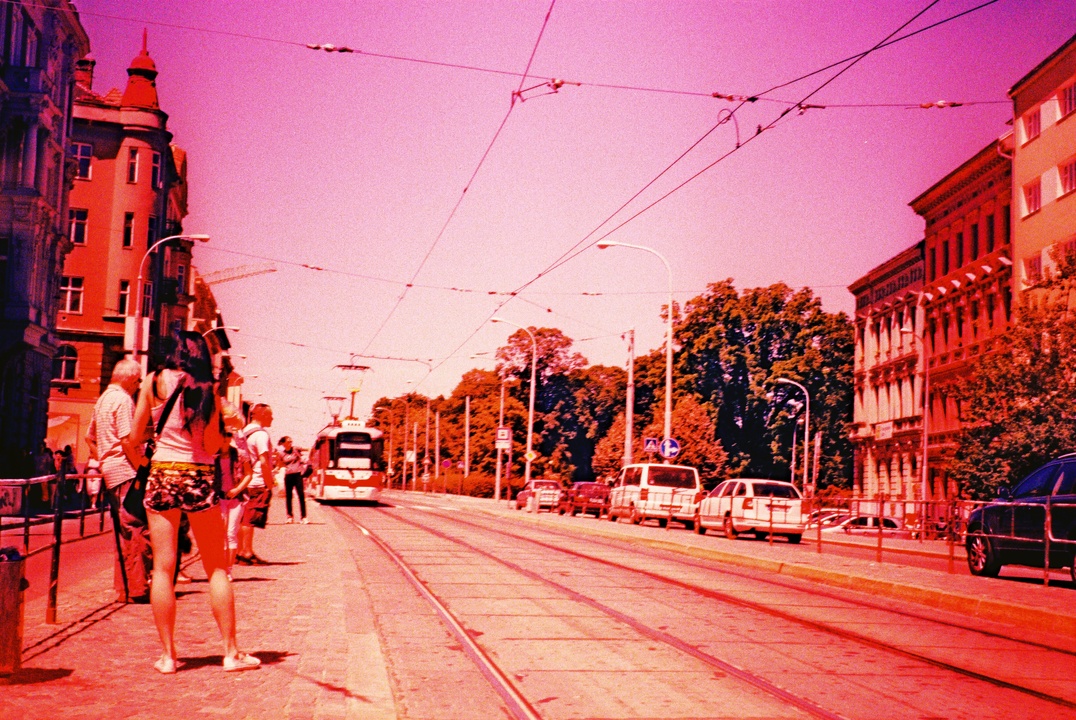
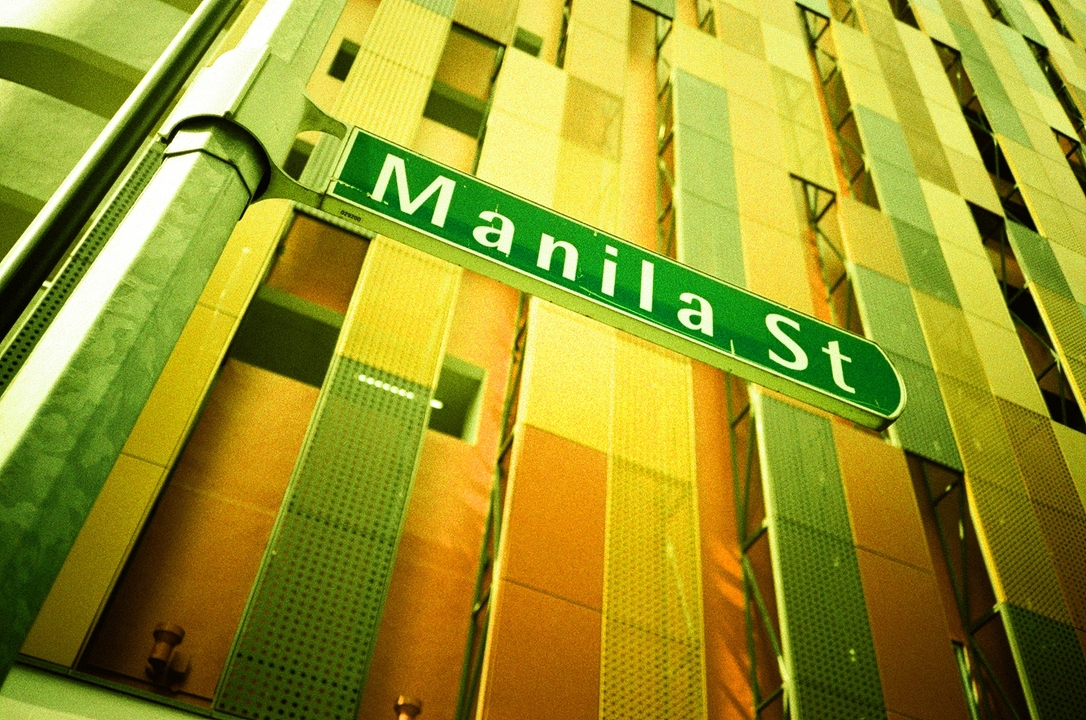
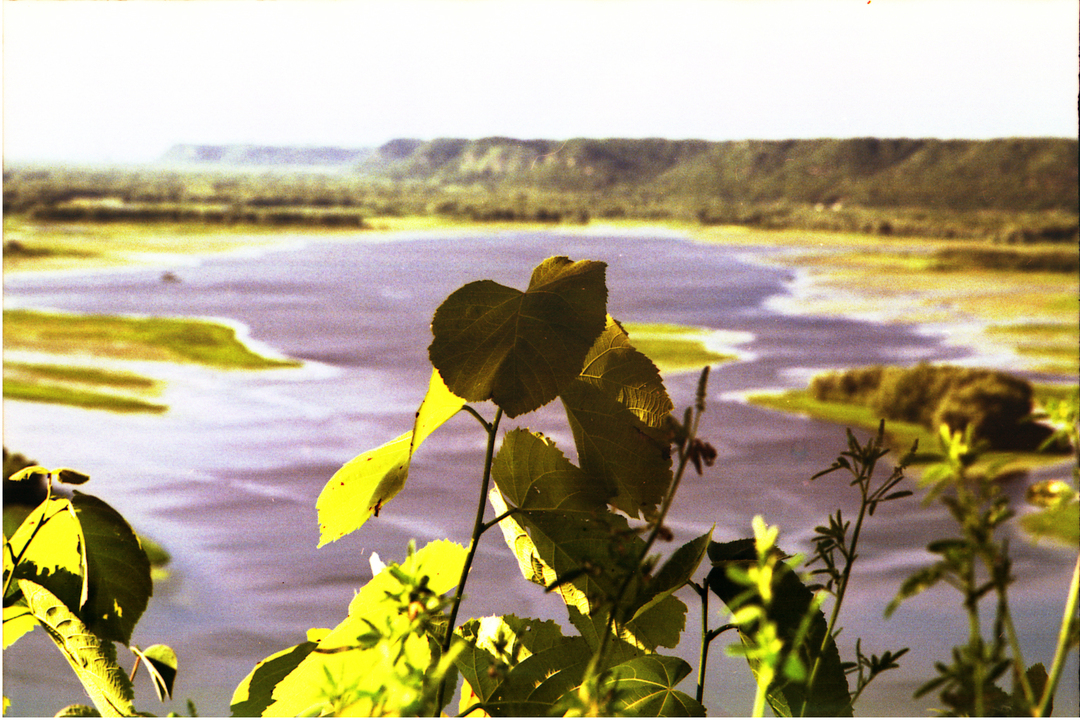
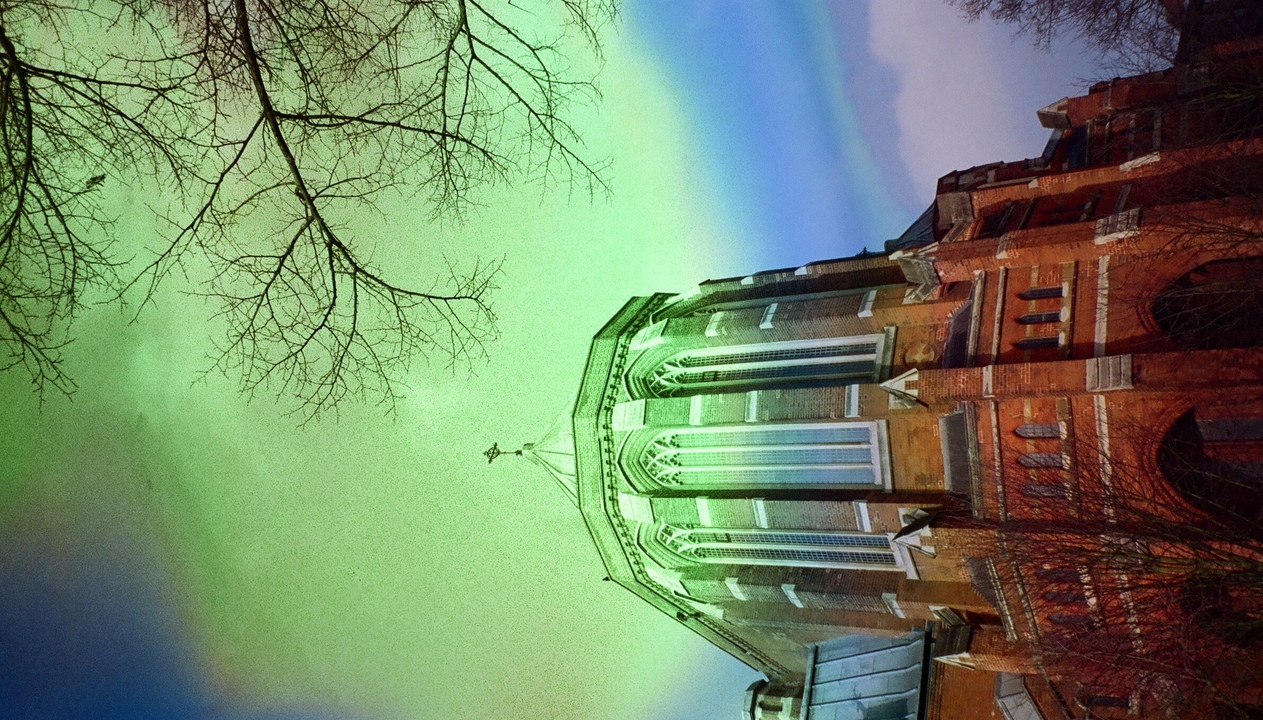
Cross-processing refers to developing a film in chemicals other than the ones it was designed for. Crossing C-41 (color negative) and E-6 (color reversal) are the most common. Cross-processing can cause strong color shifts and increased contrast.
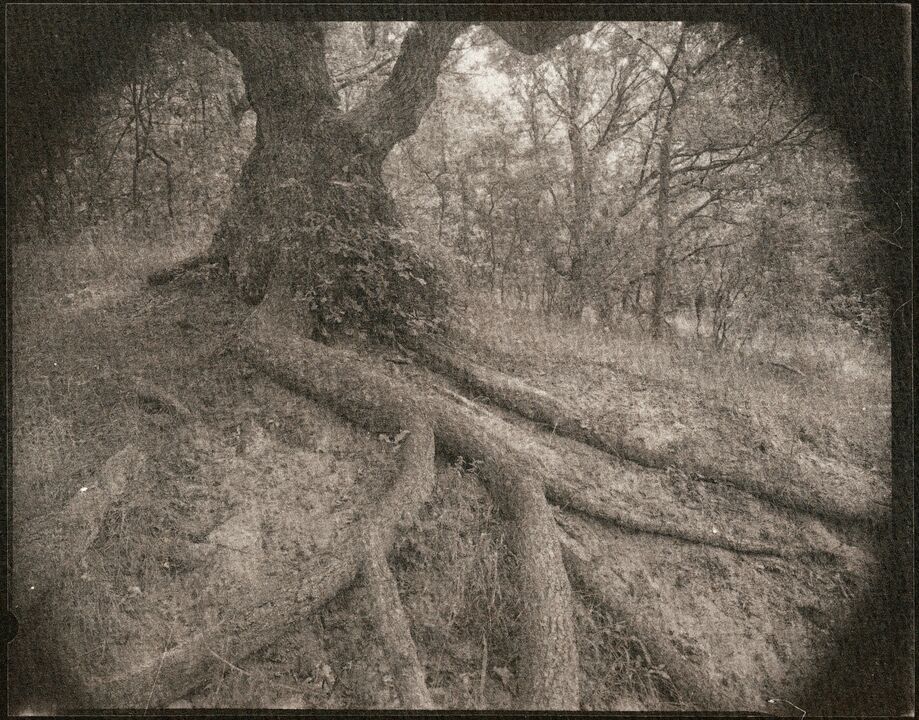
ian carolino back to manila CC BY-NC-ND 2.0

bleach bypass (negative development)

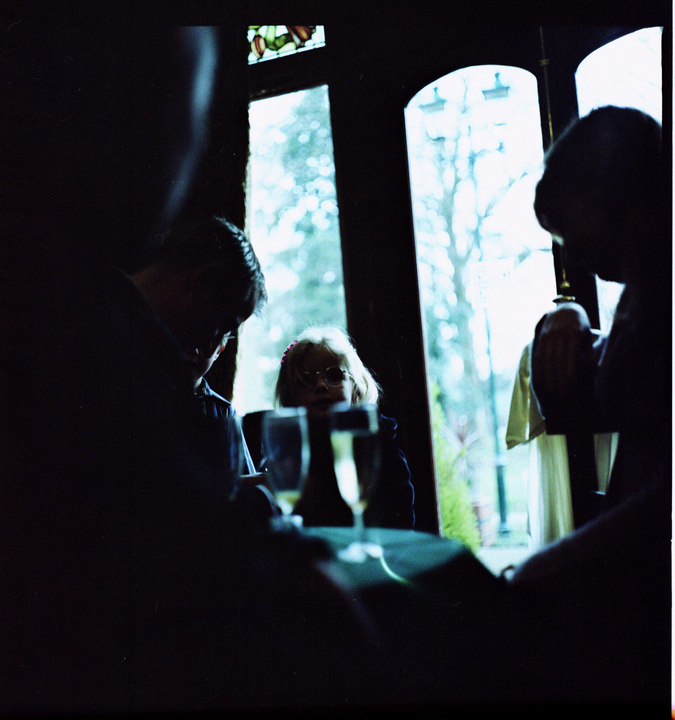
Bleach bypass is the process of omitting or reducing the bleaching stage of color film development, resulting in significantly stronger blacks and softer, muted colors.

James Blann Small Faces CC BY-NC-ND 2.0
ejstanz [untitled] CC BY 2.0

reticulation (negative development)

Film reticulation is when the emulsion layer cracks and warps due to uneven expansion, typically caused by drastic temperature changes. Typically considered a flaw, intentional reticulation can add interesting textures to a negative. The process is effectively impossible to controll.

paper negative (negative development)

Paper negatives are produced by using photosensitive paper in place of film. This is particularly common with large format cameras, where paper fits in the existing holders and is much less expensive than film. They're also frequently used with pinhole cameras. Typical photo paper is very slow, typically in the ISO 1 - 6 range, so extremely very exposure times are typical.

The paper can be briefly "pre-flashed" with light to effectively increase speed and decrease contrast. Photo paper is typically orthochromatic (low-sensitivity to red light), which affects the tonal range, but also allows visual developement in a darkroom.

Enlarging through paper is impractical, so they are typically contact-printed.

paper negative reversal (negative development)

Paper negatives can be reversal-processed by bleaching and redeveloping, forming a positive image. This allows shooting a final print directly in-camera. Color paper (RA-4 process) produces a strong color cast unless accounted for via filtration.
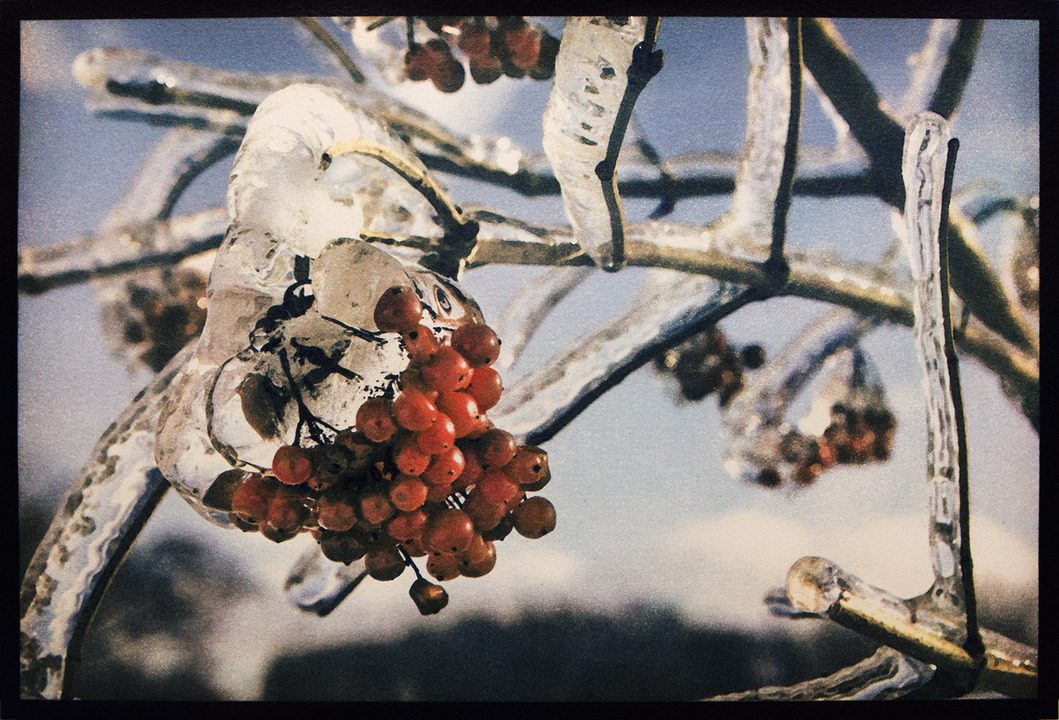
B&W reversal (negative development)

Most black & white negative films can be bleached and reversed into direct positive B&W slide film. This works best with films that have a very light or clear base.
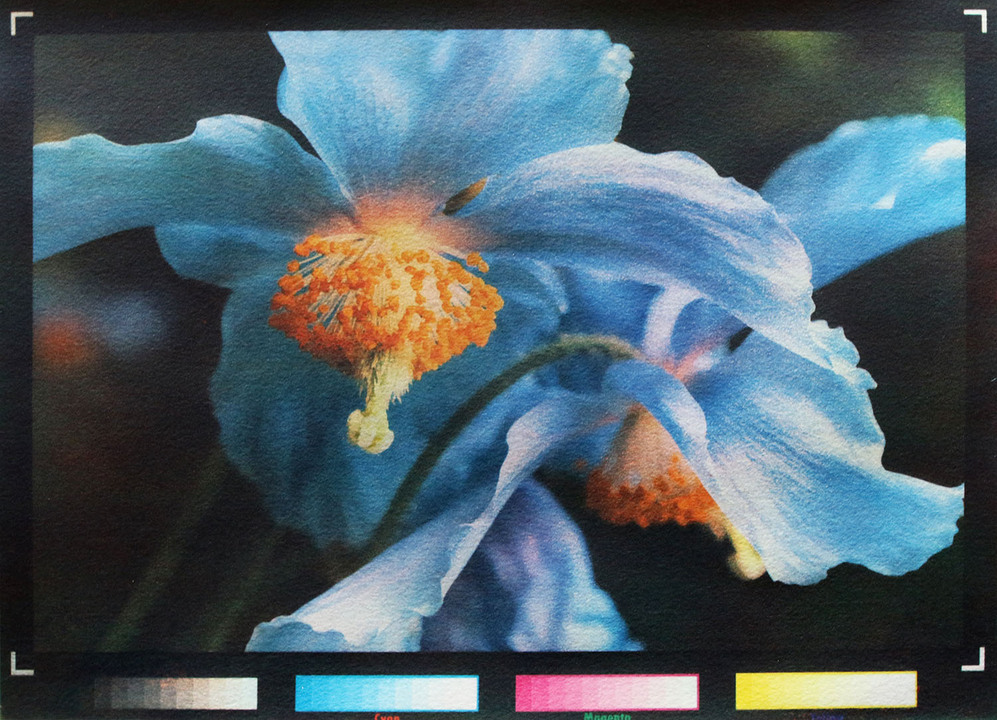
Hugo Parasol Diez CC BY-NC-SA 2.0
Benjamin Balázs Home at last Public Domain (CC0)
Laurent Été 12-23_U10-03 CC BY-NC-ND 2.0

sabattier effect (pseudo-solarization) (negative development)

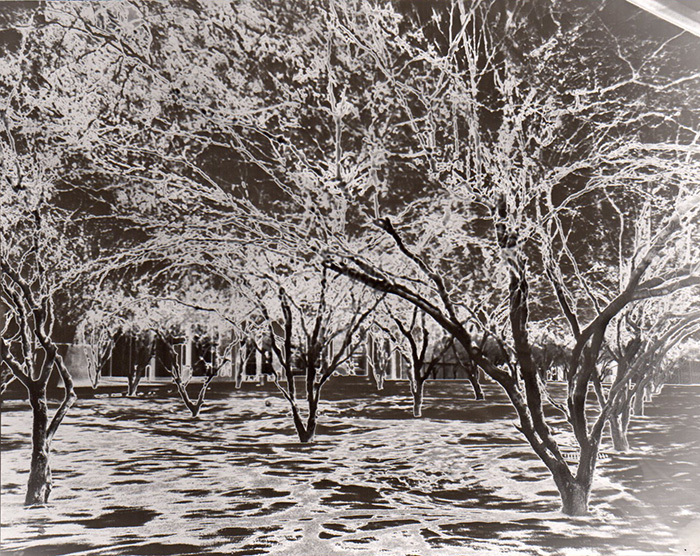
The Sabattier effect, also called pseudo-solarization and (incorrectly) solarization, is a tone inversion effect, where some or all tones in the image reverse. This is typically achieved by briefly flashing the emulsion with bright light during active development, but before the image is fully formed. While much more common on paper prints, it can be done on film negatives as well. See sabattier effect in prints for more.

film acceleration (negative development)

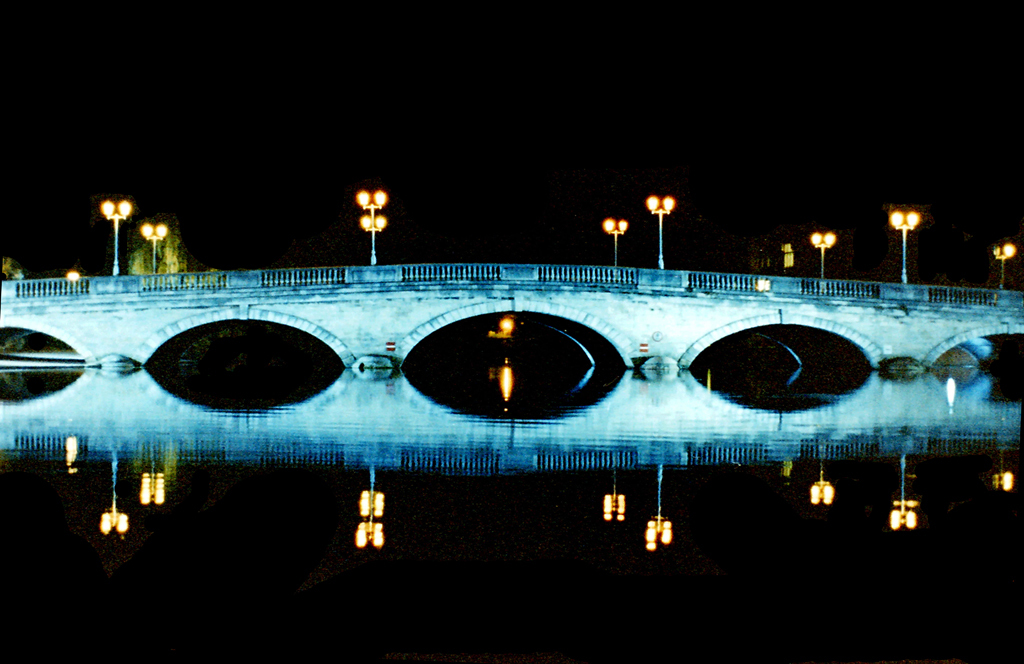
Film acceleration is a technique to push color reversal (slide) film 2 stops which also results in radical color shifts, like highly-amplified cross-processing. The film is developed in a B&W developer, bleached, then receveloped in C-41 chemicals.

ben a.k.a me bedford bridge CC BY-NC-ND 2.0

distressing negatives (negative modification)

Distressing negatives is the general concept of physically damaging them prior to making prints. There are infinite ways to do so; see the following sections for some specific methods.

distressing: melt/burn (negative modification)

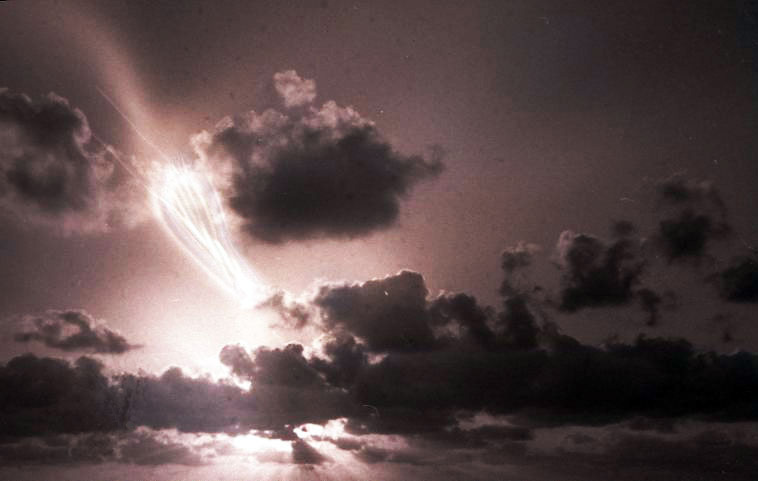
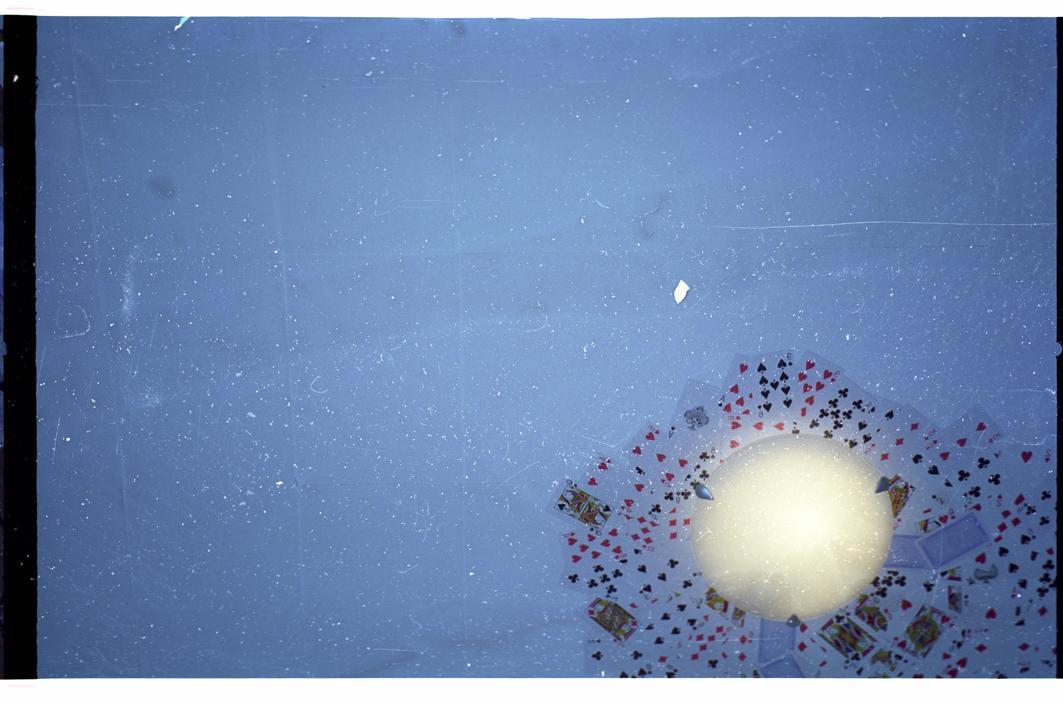
Distressing negatives with heat or flame, partially burning or melting the emulsion and/or base. The degree can range from slightly marred to near total destruction.

cx33000 burning sun*set CC BY-NC 2.0

distressing: bleach (negative modification)

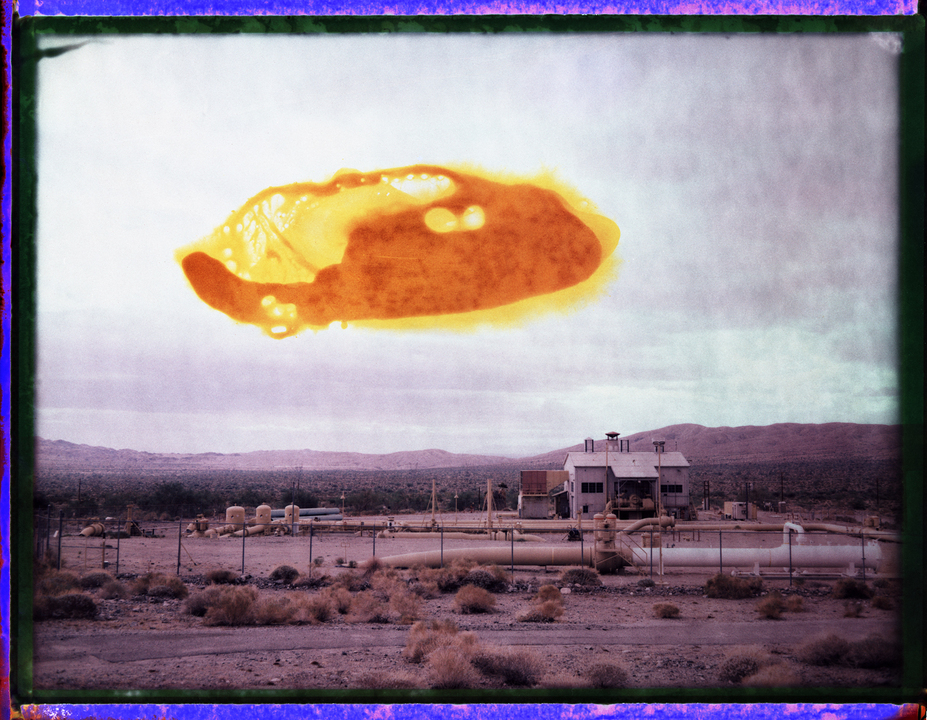
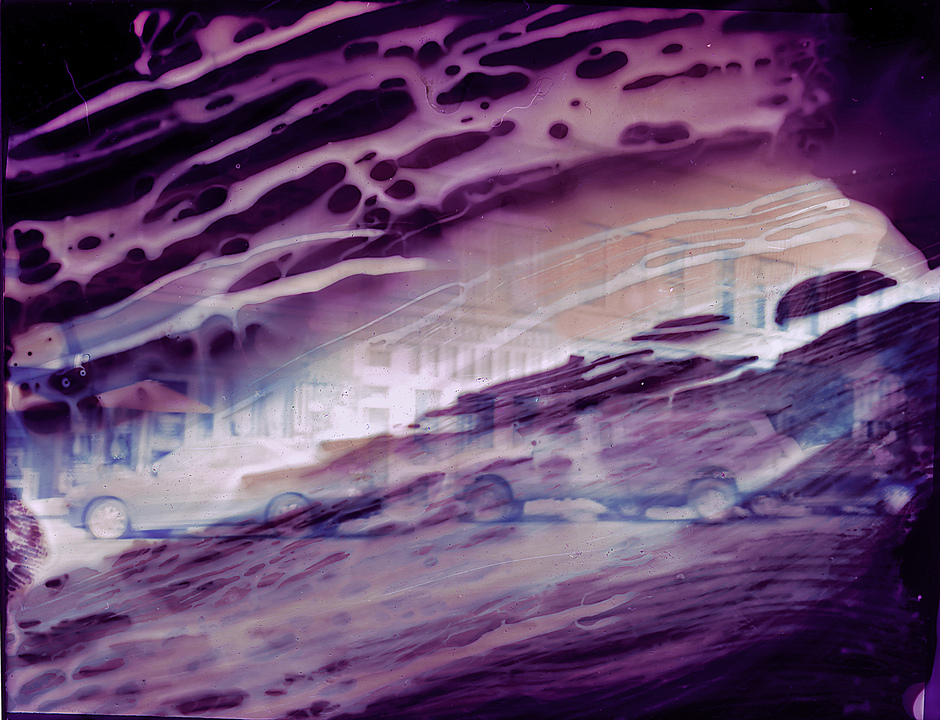
Distressing negatives with bleaching chemicals, causing spotting, smears, runs, and color shifts. This has a particularly dramatic effect on color film, as the colored emulsion layers are affected to varying degrees.

moominsean Box Canyon, CA CC BY-NC-ND 2.0

distressing: stretch (negative modification)

Distressing negatives by physically stretching them while heated. It's unclear if anybody has ever done this successfully in a controlled manner.

distressing: scratch (negative modification)

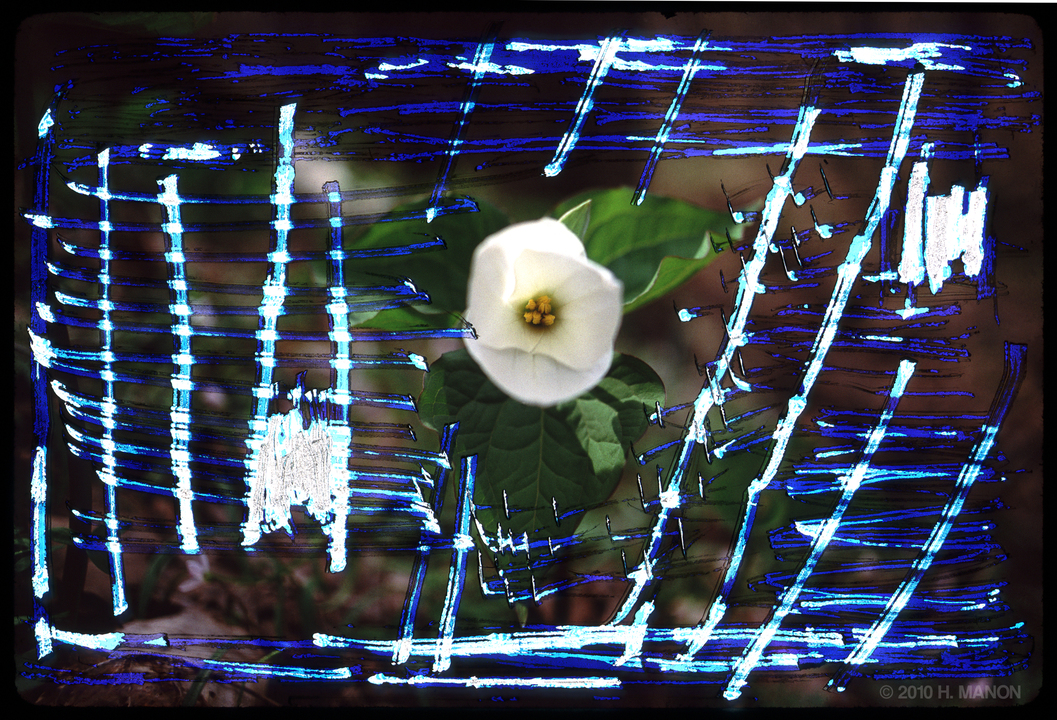
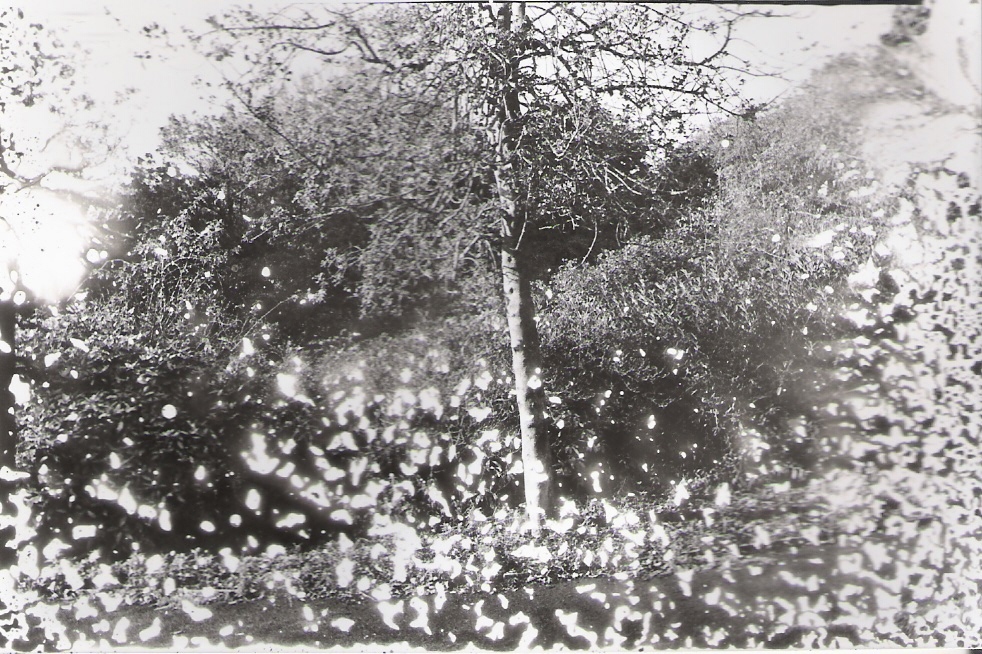
Distressing negatives by intentionally scratching them. Scratching the emulsion layer tends to produce black lines in a final print, while scratching the non-emulsion base tends to produce white lines. It can be done roughly by scraping, sandpapering, or stepping on the negatives. Or it can be done in a more controlled manner by hand, with a needle or knife.

distressing: burial (negative modification)

Distressing negatives by literally burying them underground, in soil or sand, for a long period of time. This is effectively a combination of distressing by scratching and distressing by bacteria.

distressing: bacteria (negative modification)

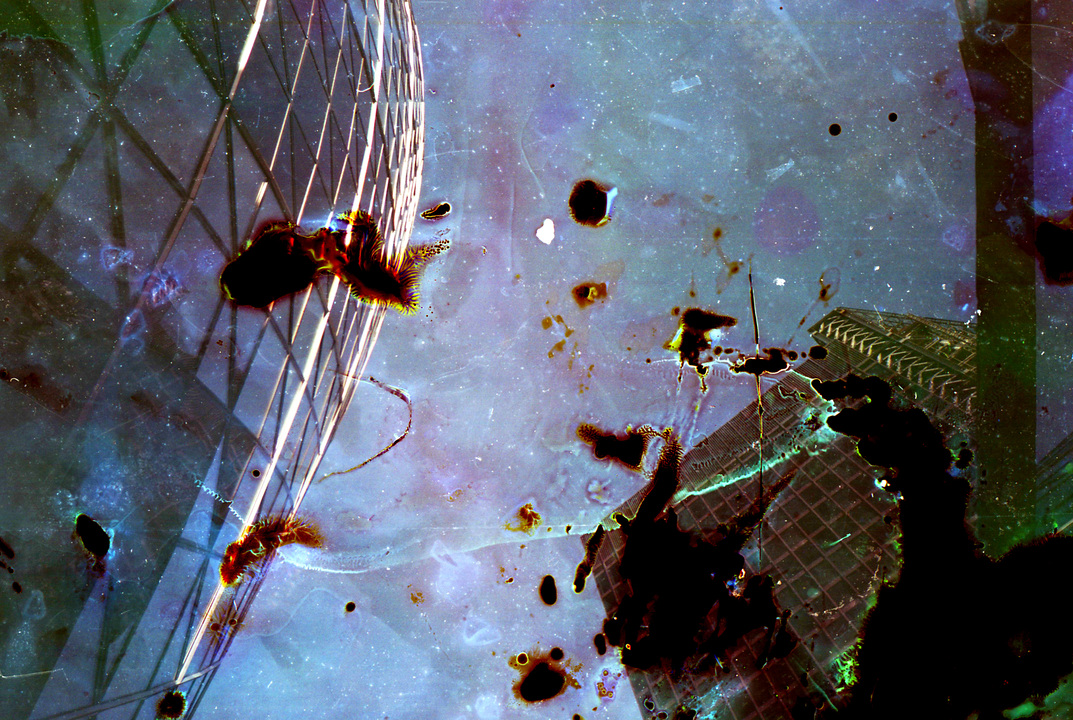
Distressing film by submerging it in a solution with active bacteria and waiting for the live cultures to consume or destroy parts of the emulsion. This seems to be practiced by one single artist, but effectively.
shatter (negative modification)

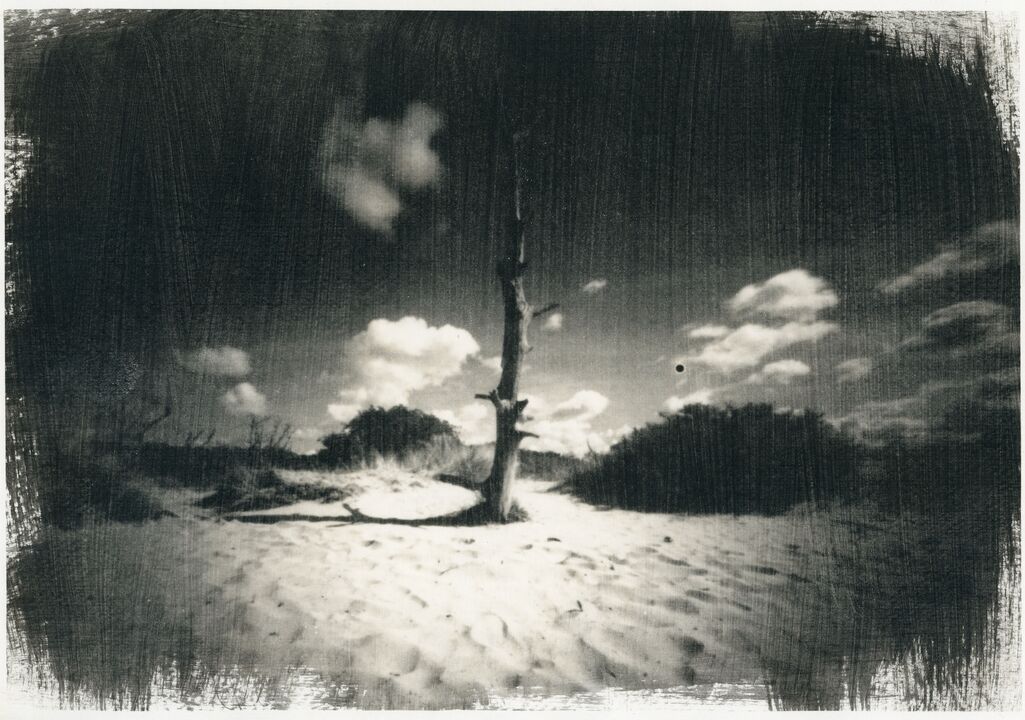
There's no sign of anybody ever doing this intentionally, but glass plate negatives can be shattered and reassembled before printing. The case studies in how to repair broken glass plates are a source for interesting images. Perhaps plastic-base film can also be shattered somehow, or the effect can be simulated by cutting.

etching / engraving (negative modification)

The process of hand-etching patterns, drawings, text, or touch-ups directly on a negative with a sharp instrument such as a needle or knife. This is the exact same process as distressing with scratches, differing only in that it has a more specific visual intent. An image produced entirely by engraving a blank negative would be a form of Cliché verre.

natasha untitled CC BY-NC-ND 2.0

drawing / painting (negative modification)

Drawing on negatives with markers or paint before printing. This is a similar process as etching, but produces very different results.

film soup (negative modification)

Film soup is the general concept of spraying or submerging film in a mixture of chemicals before development, resulting in a huge possible array of visual artifacts: staining, color shifts, speckles, warping, degradation. The film can be soaked before or after shooting images. See the sections below for specific, common film soup subcategories.
film soup: chemical bath (negative modification)

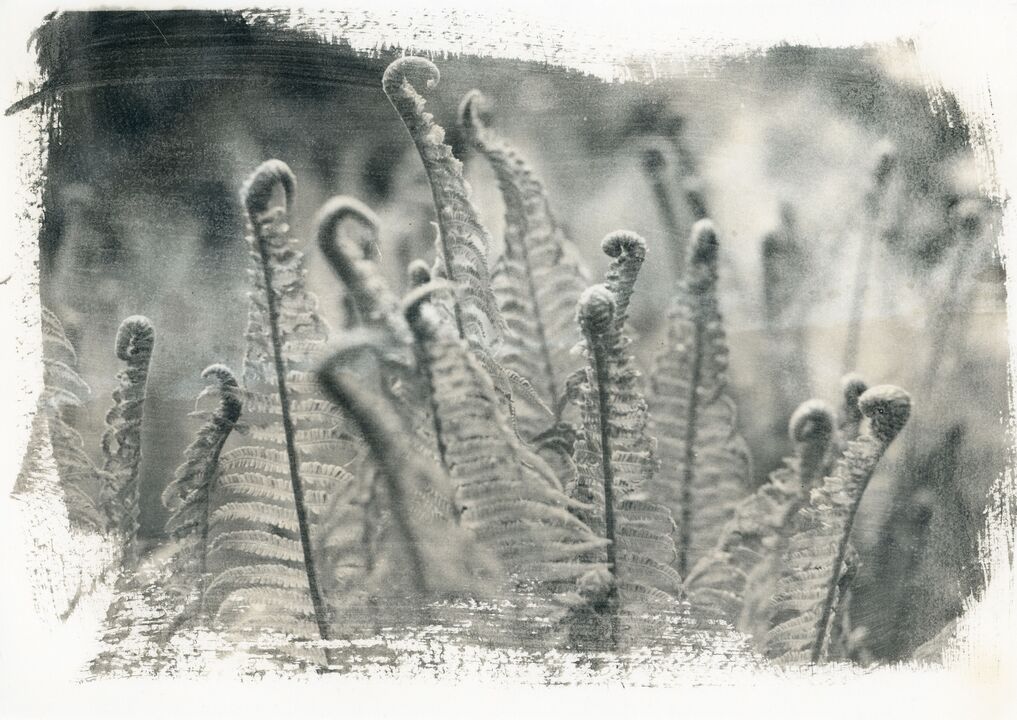
Soaking in a chemical bath is the original and most common form of film soup. The chemicals are often household items like dishwashing soap, wine, vinegar, or soda in various combinations. The film is soaked for anywhere from a few minutes to a week, rinsed, dried, and then used as normal. The results depend on the soup recipe, type of film, soaking method, and random chance.

Dellboyy Art Snowdonia CC BY-NC-SA 2.0

film soup: boiling (negative modification)

A minor variant on chemical bath film soup in which the film is boiled for some or all of the soaking process. Boiling time ranges from a few seconds to hours.

film soup: dishwasher (negative modification)

A variant on chemical bath film soup in which soaking is replaced with placing the film in a dishwasher during a wash cycle.

Russell Darling Gas Towers CC BY-NC-ND 2.0

sabattier effect (pseudo-solarization) (print development)

The Sabattier effect, also called pseudo-solarization and (incorrectly) solarization, is a tone inversion effect, where some or all tones in the image reverse. This is typically achieved by briefly flashing the emulsion with bright light during active development, but before the image is fully formed.

spray/splatter developer (print development)

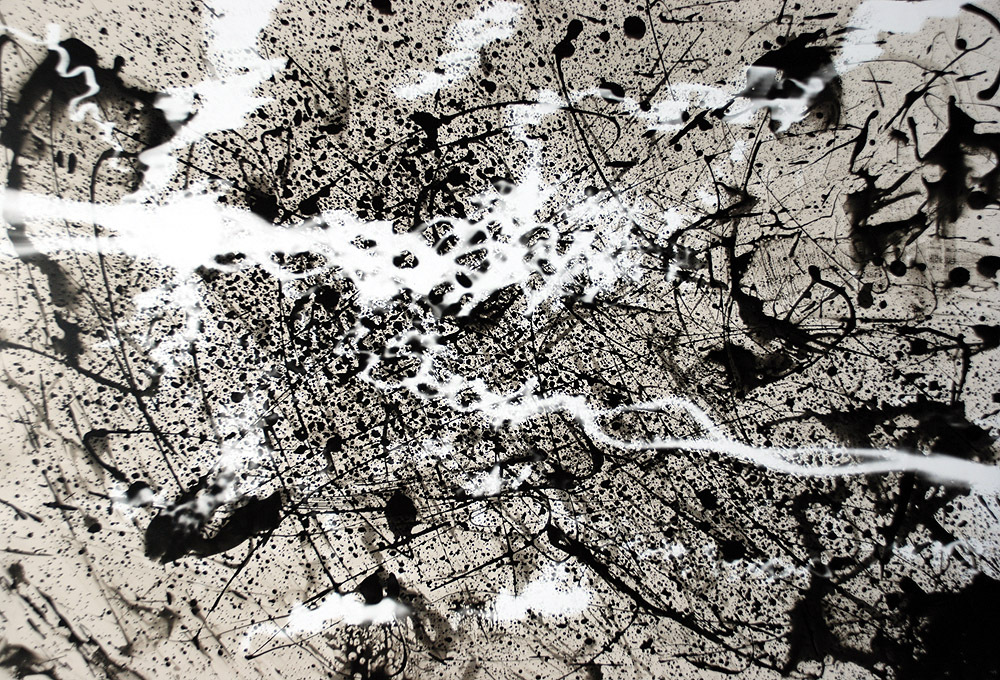
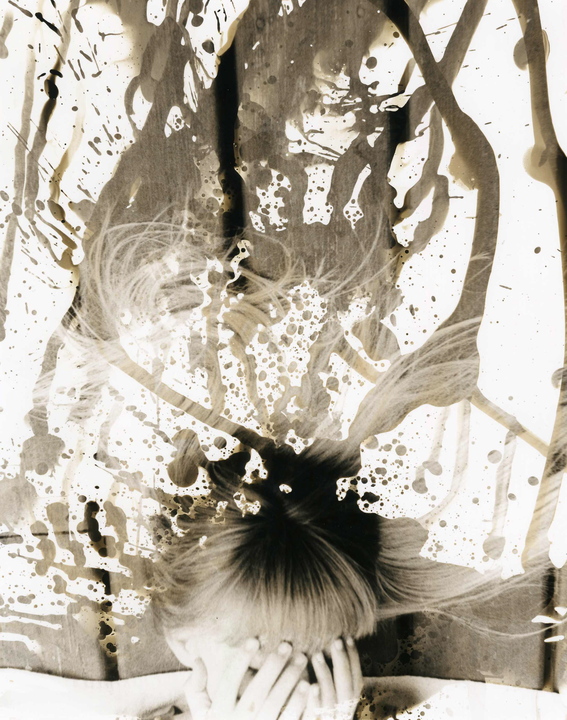
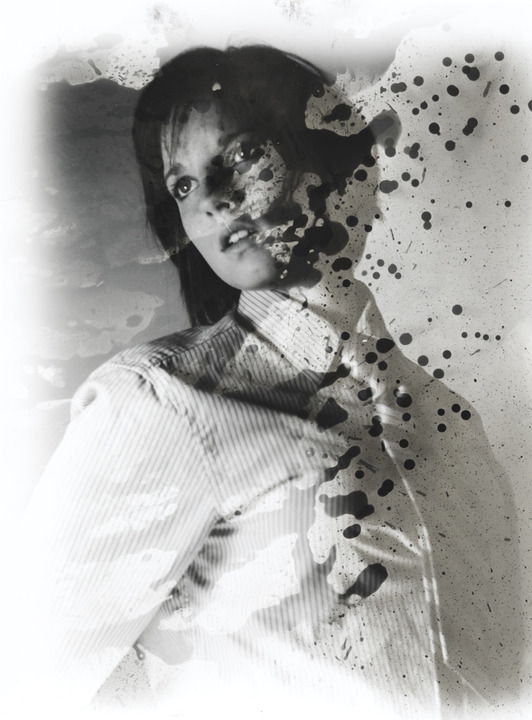
Instead of submerging a print evenly in a developer path, developer can be manually splashed or sprayed on to the print, which can be twisted and turned to cause the liquid to run. The print develops in the pattern of the liquid trails, leaving the unaffected areas white.

Antonio [untitled] CC BY-NC-SA 2.0
katiecooperx [untitled] CC BY-NC-SA 2.0

brush on developer (print development)

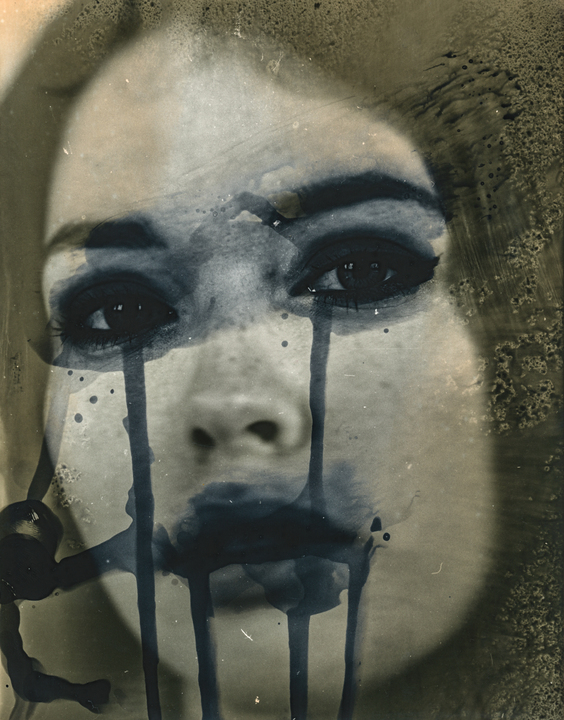
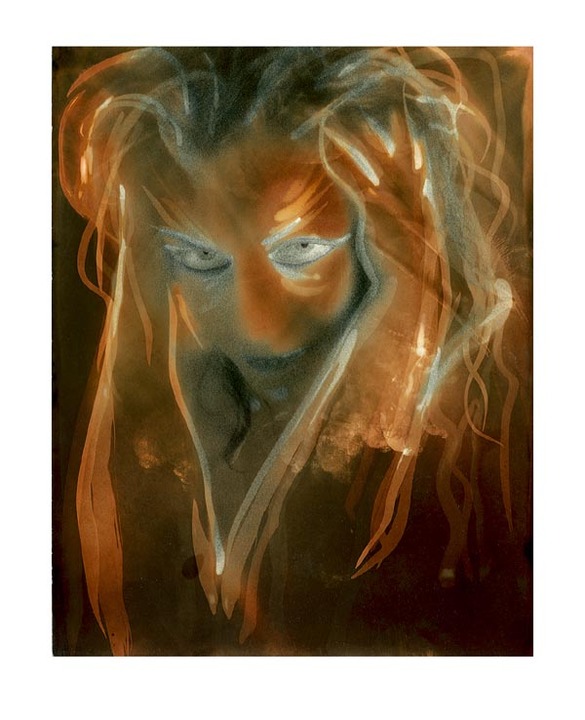
The same technique as spraying developer, but applied intentionally with a brush or sponge to carefully control which areas develop, and how.

Kent Barrett Painted face CC BY-NC-ND 2.0

chemogram (print development)

Combines the chemigram techniques with traditional prints: after exposing and fully or partially developing a print, resists can be applied to the paper followed by an arbitrary combination of applying developer, fixer, and extra light exposure.

multiple exposures (print projection)

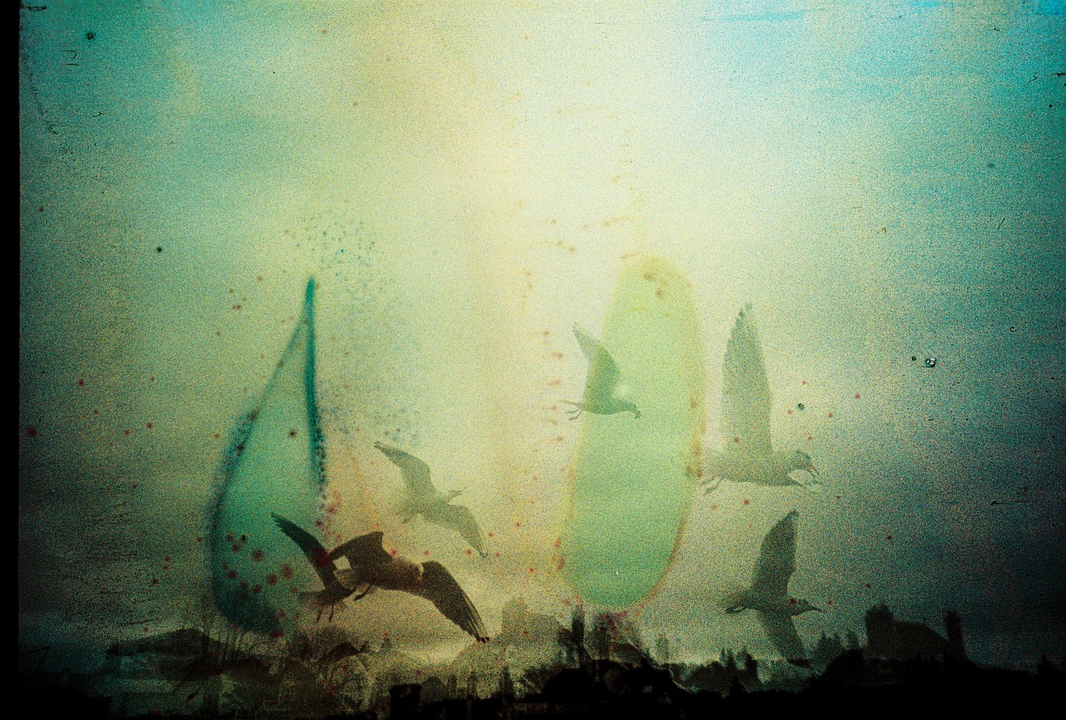
Multiple exposure is the process of exposing multiple negatives on the same photo paper, or the same negative several times, with independent adjustments and masking possible for each exposure. This allows for more intentional control than conventional in-camera multiple exposure, since the projections can be carefully planned in advance.

sandwich negatives (print projection)

Sandwiching negatives is the process of placing two or more negatives in the negative holder at the same time during enlargement. This is a variant of multiple exposure, but both images are exposed with the same intensity and duration. The negatives can optionally be modified by cutting out masks or cutting away backgrounds.
composite projection (print projection)

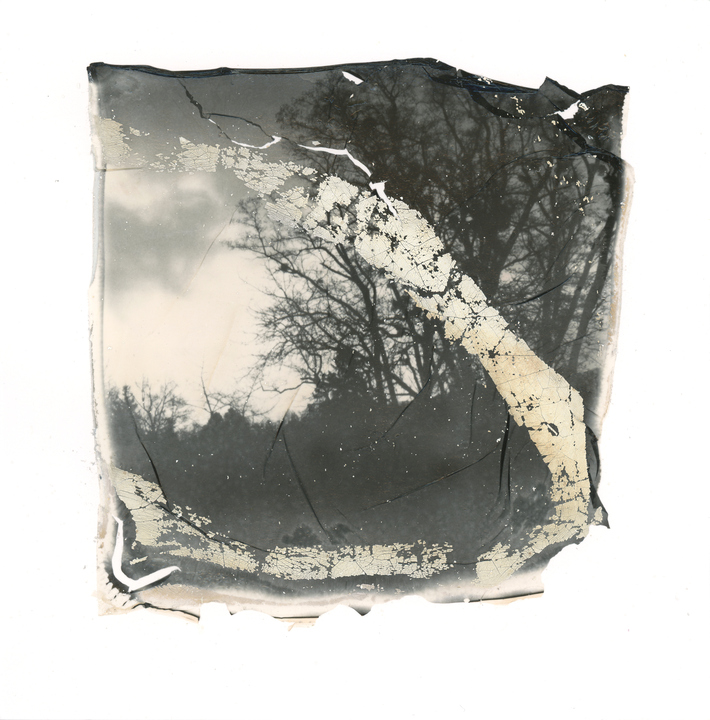
Compositing is a subset of multiple exposure in which the multiple exposures are carefully arranged to appear as a comprehensive, unified scene in the final print, as opposed to blended together. Compositing often uses precise masks to prevent blending. Panoramas constructed from several negatives are a further subset of composite prints.

overlay with solarized positive (print projection)

A negative can be contact-printed to a positive copy, which is pseudo-solarized (sabattier effect) during development. The two films—negative and solarized positive—are then sandwiched in the negative carrier and enlarged (or contact-printed together). The original sources recommend orthochromatic film for the interpositive and RA-4 color paper for the print, and the result is an abstract cascade of colors outlined by the original image.

project through liquid (print projection)

A variant of watergrams, an image can be projected onto photographic paper that is submerged in developer. Carefully agitating the liquid from the edges will add watergram-like shadows atop the print.

project through floating negatives (print projection)

A variant of projecting through liquid in which the negatives are floated in the liquid above the paper.

project on uneven paper (print projection)

The photographic paper can be raised at an angle, curved, bent, crumpled, or otherwise manipulated away from perfectly flat during the enlargement. The non-flat areas will be out of focus and distorted, and exposure strength will be uneven.
project through prisms (print projection)

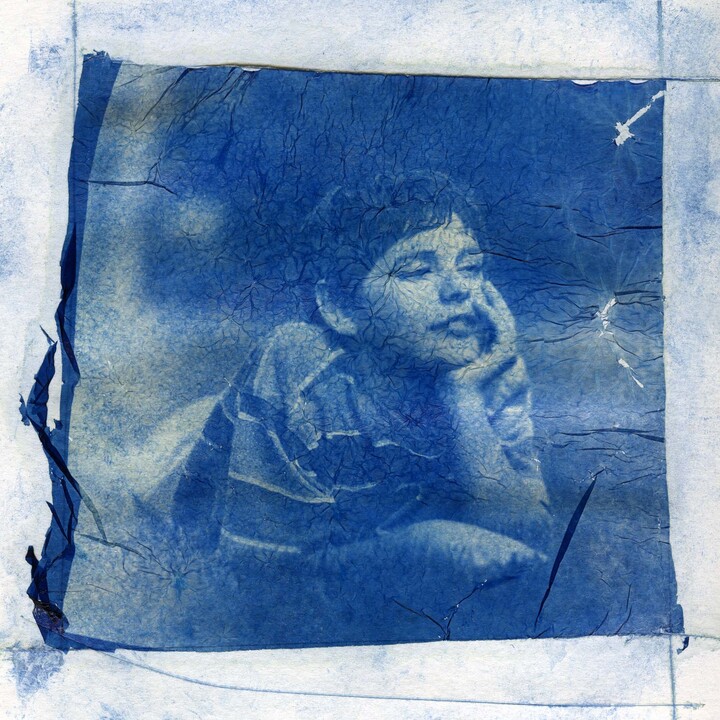
Enlarging through an optical prism or a prismatic lens filter can bend, invert, distort, or duplicate all or part of the projected image. The same effects that are possible in camera can be done in the darkroom.
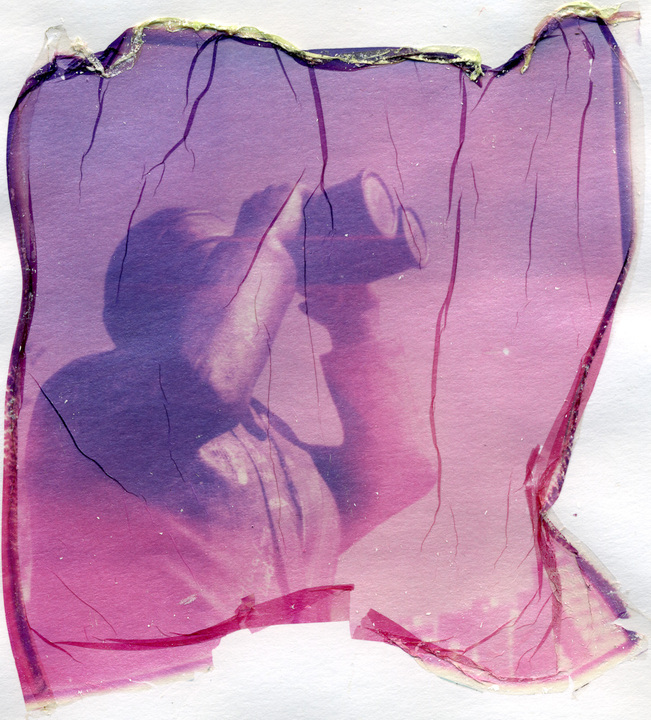
project through textures (print projection)

Textured, translucent items can be placed in the light path to add texture to the final print. Bubble wrap, negative sleeves, mosquito netting, partially-frosted or patterned glass, stained glass, etc.

project through newspaper/magazines (print projection)

Placing cut-outs from newspapers or magazines on a print during enlargement. Dark and thick cut-outs produce a silhouette, while thinner or lighter pieces allow some light to penetrate and reproduce some of the cut-out image (in negative).

obscure projection with patterns (gobo) (print projection)

Obscuring part of the projection with solid, patterned objects or hand-made masks. Objects with holes or lines, such as a grill grate, block portions of the print, with hardness or softness proportional to their distance from the paper. This is similar to a "gobo" in studio lighting.

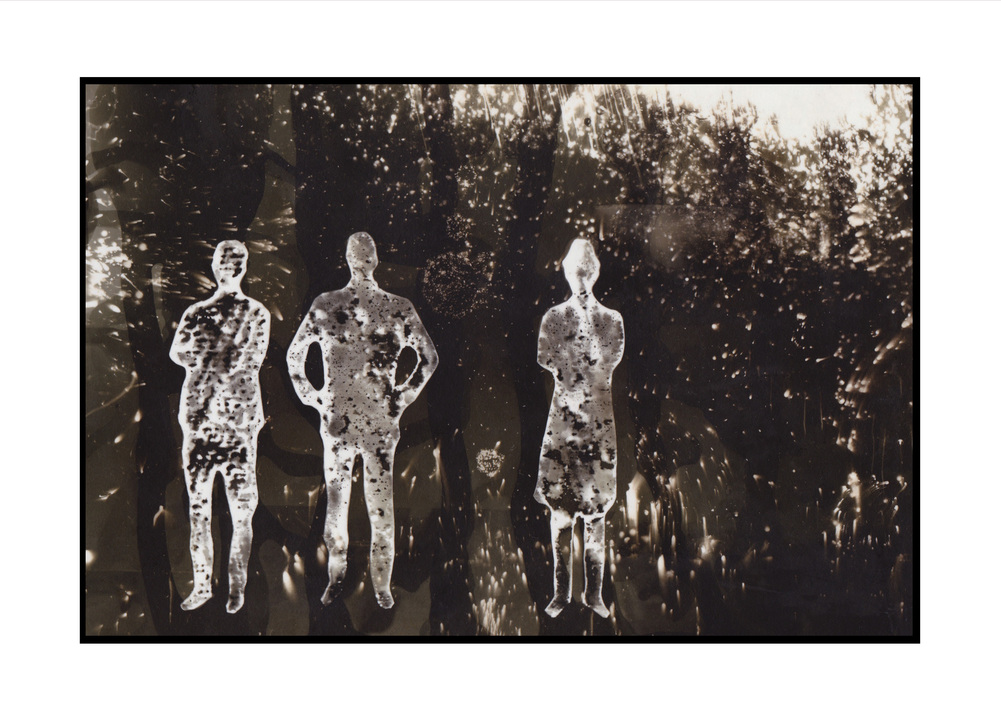
cut silhouettes (print projection)

A more specific gobo, precise silhouettes can be cut from cardboard or thick paper and used as masks during projection. Cleanly cutting an object out of a test print and using that as a mask laying atop the paper in the final print results in printing exlusively that object from a larger image.

project through tracing paper (print projection)

Projecting through thin tracing paper adds a light softness to prints, and drawing on the tracing paper obscure the print in ways similar to etching the negatives. Multiple layers of tracing paper can be layered to further soften the image.

project on multiple papers (print projection)

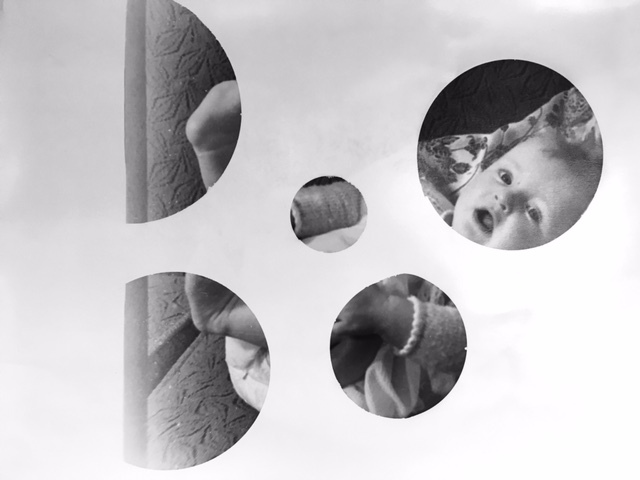
Rather than projecting onto a single piece of photographic paper, the image can be enlarged across several papers, potentially with gaps between them for effect.

Kaometet's box [untitled] CC BY-NC-SA 2.0

intentional blur (print projection)

Moving the print during exposure can produce an effect similar to that of taking a photo with a slow shutter speed and high-speed strobe flash.

vignette (print projection)

Using a sheet of paper or cardboard with a round hole cut in it as a mask can produce white vignetting on the project image, while dodging with a round circle over the image can produce a black vignette border.

liquid emulsion (print projection)

Liquid emulsion is a light-sensitive liquid that can be brushed or poured onto surfaces, and dries into a light-sensitive emulsion that can be used in place of photo paper. It has been used successfully on paper, canvas, wood, ceramic, glass, concrete, and other surfaces. Additional layers of gelatin may be used to prepare the surface, particularly for very smooth or very porous surfaces.

Mark Dries The Ridge #2 CC BY-NC-ND 2.0
Mark Dries Fern CC BY-NC-ND 2.0

light painting (print projection)

Light painting is hand-drawing patterns on a print before or during development with a handheld torch, LED, laser pointer, or similar directed light source.

emulsion lift / transfer (print modification)

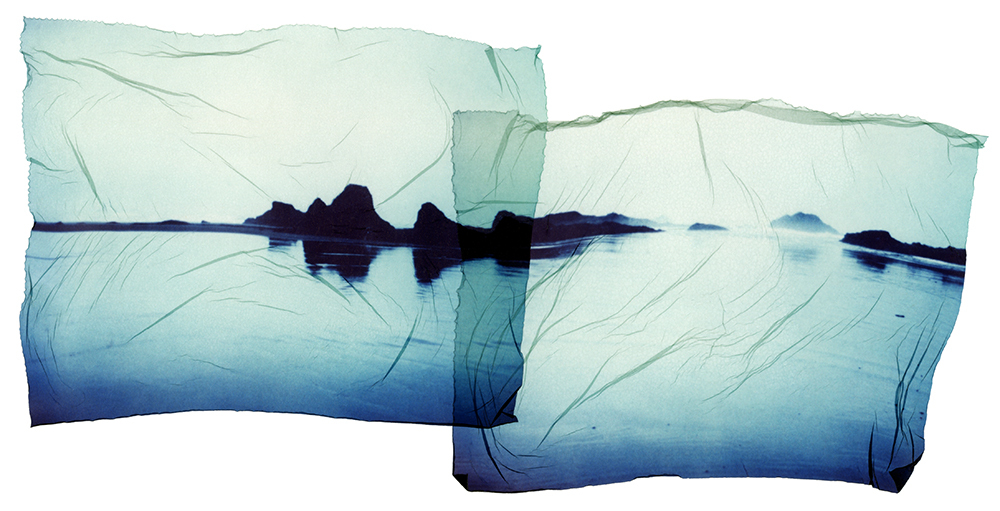
Emulsion lifting is when the emulsion layer of a print or negative is physically lifted off of the base material (the paper or plastic film), typically by soaking in water or chemicals. The emulsion can be set back down on the original surface, wrinkled from the process, or transferred to a different backing medium like paper, wood, cardboard, ceramic, or glass. This is almost exclusively done with Polaroid prints.

Tyler Hewitt untitled CC BY-NC 2.0

mordançage (print modification)

Mordançage is a process of bleaching and redeveloping B&W prints, but using a bleach solution that physically detaches the darkest, most-exposed regions of the emulsion from the paper. The detached shadow regions can be removed entirely, giving something like the sabattier effect, or allowed to re-settle on the print as in emulsion lifts, which can produce an abstract, flowing, cloth-like texture. Redevelopment not only brings back the shadows, but can also produce strong color shifts.

George Smyth Veronica CC BY-NC-SA 2.0

chromoskedasic sabattier (print modification)

The chromoskedasic sabattier process is a specific variant of chemograms; two chemicals, an activator and a stabilizer, are alternately hand-applied to a developed but unfixed print under strong light. The chemicals physically move the silver halide deposits around in the paper substrate, changing how they scatter light such that they can produce a wide range of colors, often with a metallic sheen. Shadows remain mostly unaffected.

toning with household items (print modification)

Some household ingredients can be used for toning (or staining) prints. Examples include coffee, tea, and wine.

selective bleaching (print modification)

The process of carefully chemically bleaching parts of a print by hand with a paintbrush. Traditionally done to control contrast, it can be used creatively to create artificial patterns or invert dark tones.

hand-bleached color (print modification)

The same process as selective bleaching, but when a bleaching chemical is brushed on to RA-4 color prints, the colored dye layers are affected unevenly, leading to interesting color shifts in the painted regions.

selective toning (print modification)

Selective toning is toning only parts of a print, either by hand or by masking.

Frank Brouwer kaalstaart2 CC BY-NC-ND 2.0

photo encaustic (print modification)

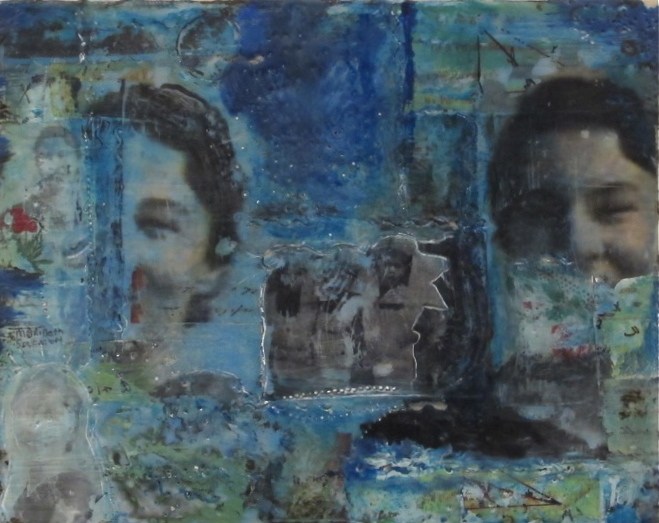
Encaustic painting is paintings formed from colorful, hot wax. Photo encaustic is applying the same colored wax atop photographic prints, which adds color, painting-like aesthetics, and three-dimensional texture.

solomonchik Insomnia CC BY-SA 2.0

silver mirroring (print modification)

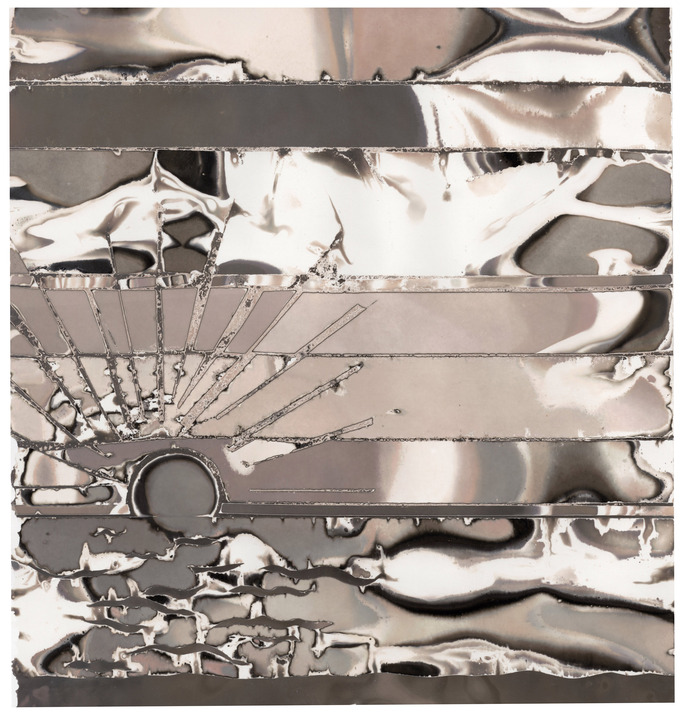
Silver mirroring is a specific toner that gives a metallic sheen to all or some of a print. This happens as a natural flaw in old photographs, but can be induced intentionally for artistic effect.

image on sprockets/rebate (in-camera)

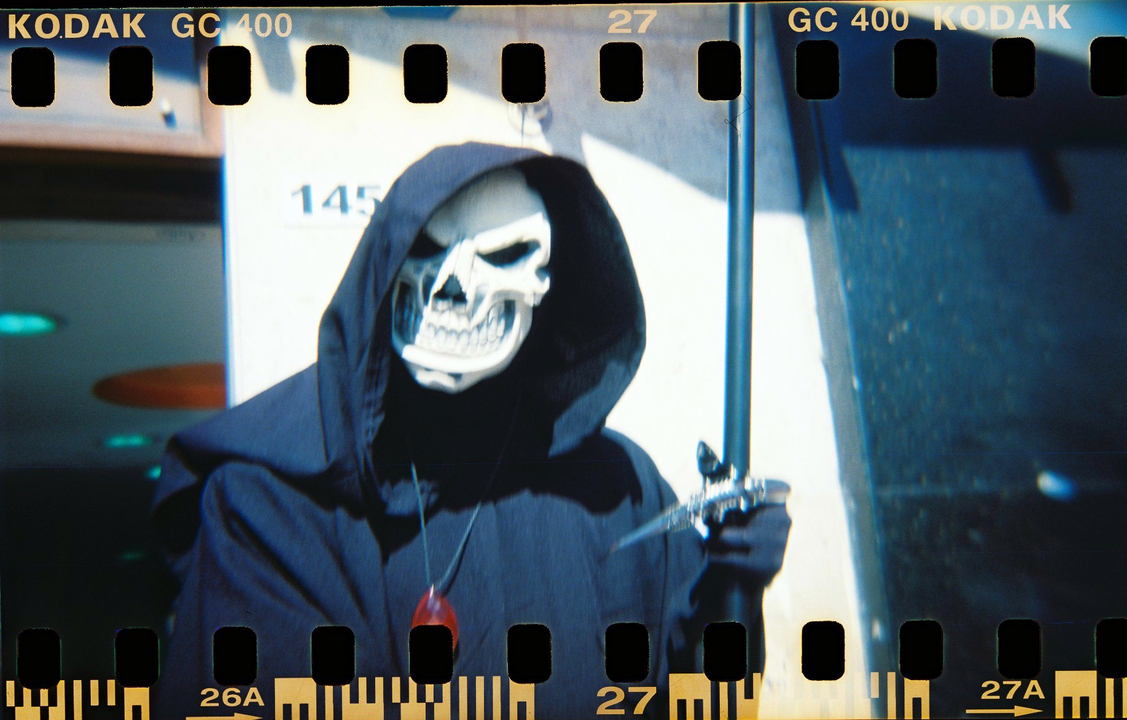
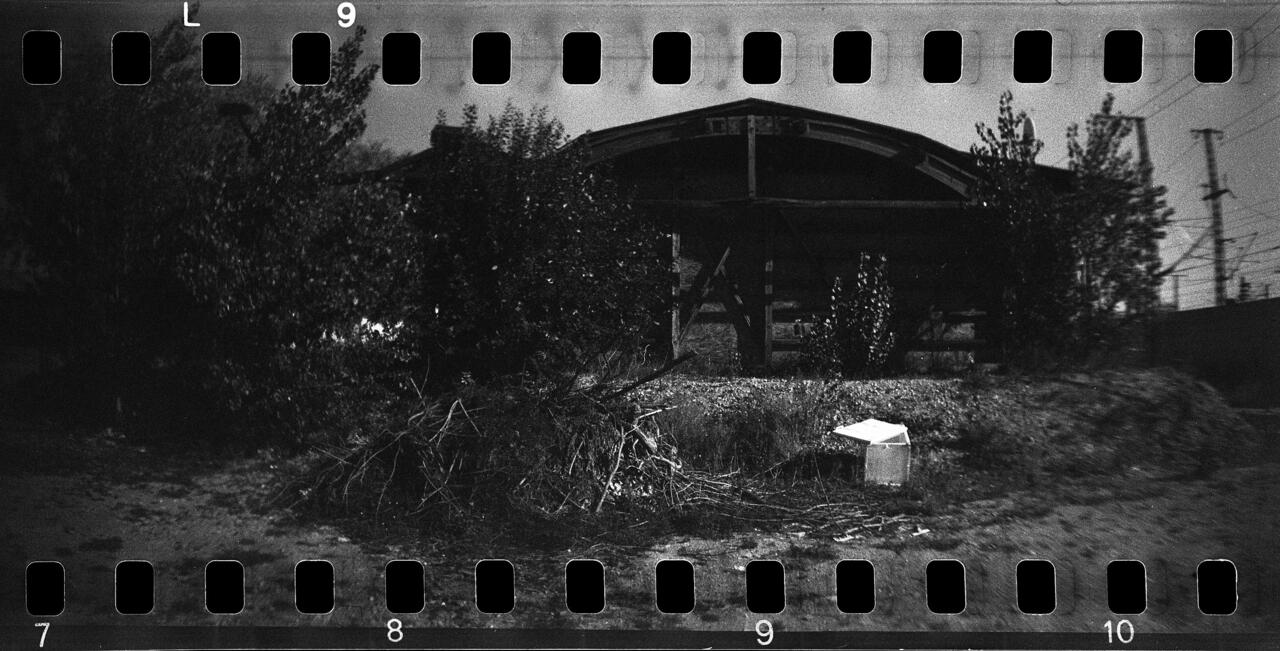
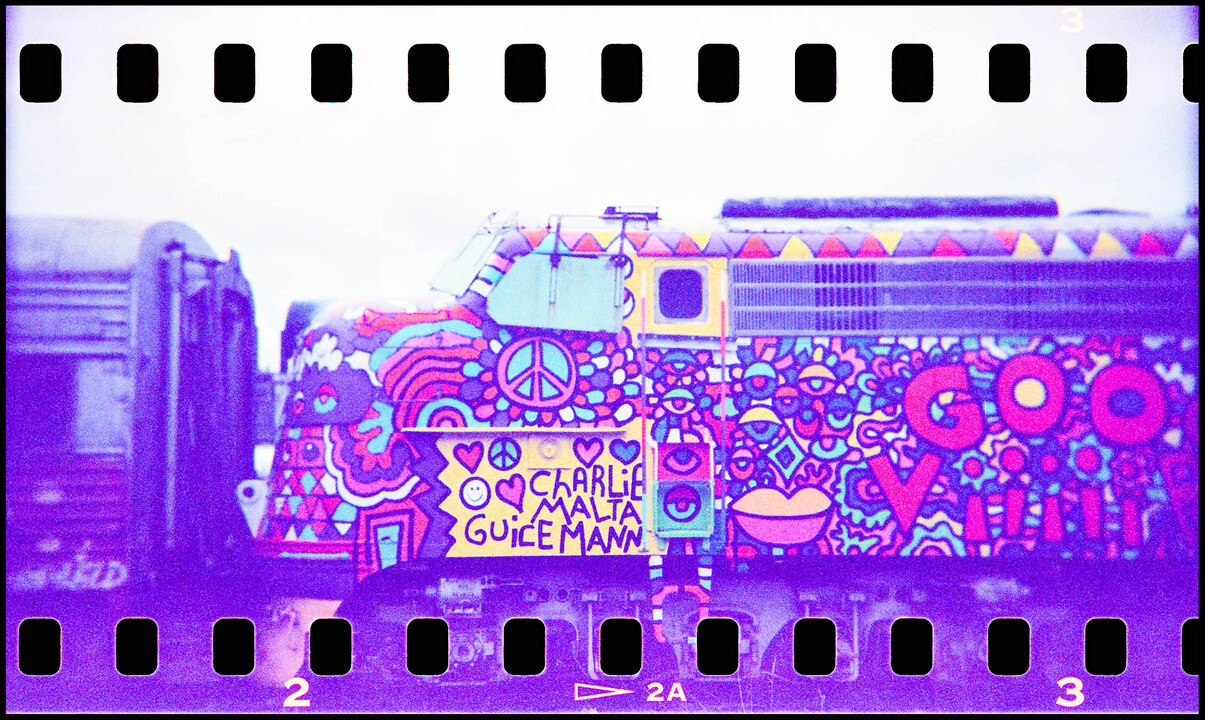
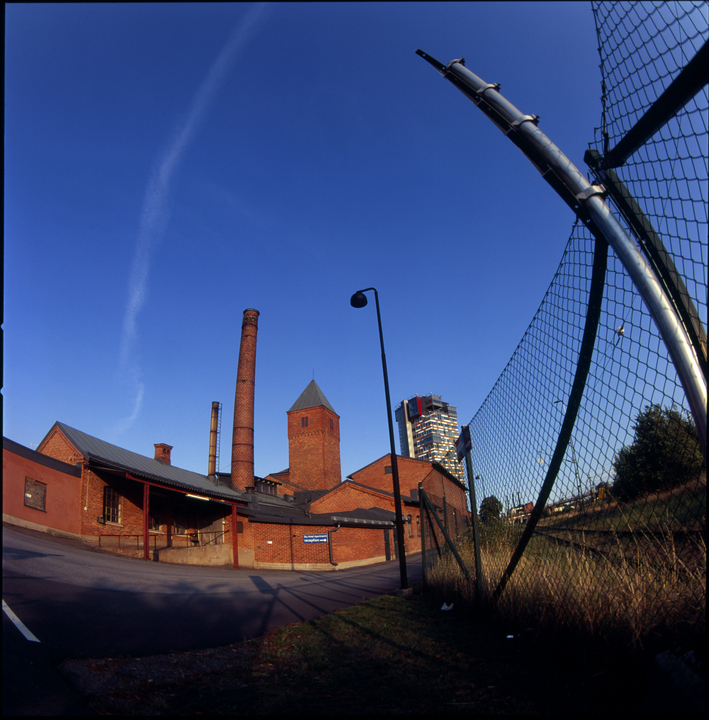
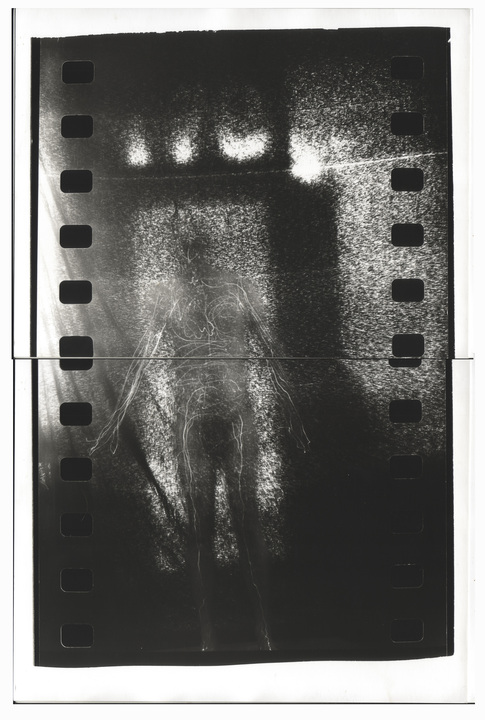
The technique of capturing an image all the way to the edge of film that has an edge rebate, typically with 35mm film that has sprocket holes. This requires a camera specially designed for it, or adapting a custom lens, or adapting a film holder for a camera designed for larger film.

Cleber Machado Morte CC BY-NC-SA 2.0
Daniela Goulart [untitled] CC BY-NC-ND 2.0
c0re.work Der Güterbahnhof CC BY-NC-SA 2.0

photomosaic on negatives (in-camera)

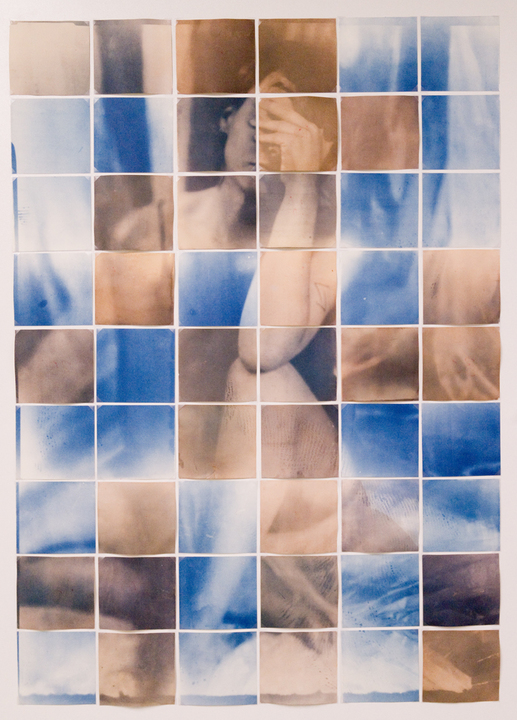
Shooting photographs such that the negatives themselves can be cut into strips and contact printed, resulting in an intentionally-designed photomosaic. With care, a single "virtual image" can be constructed by treating a 36-shot roll as a 6x6 grid.

partial-wind panoramas (in-camera)

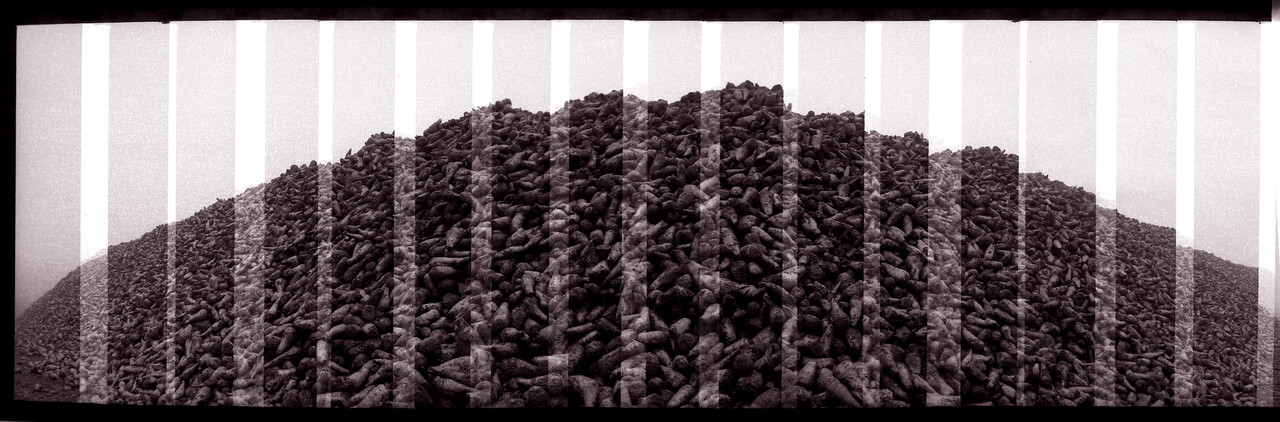
Producing panorama images, or ultra-wide abstract shots, by only partially winding a camera between frames such that the frames either overlap or intersect.

Aleks_Kuntz Movie on film # CC BY-NC-ND 2.0

diptych / triptych (presentation)

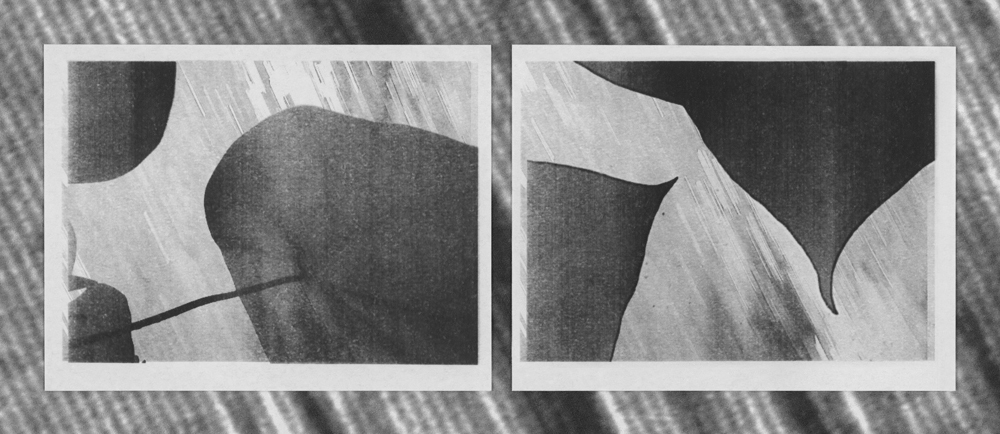
Printing images or mounting prints in pairs/triplets such that the combination tells a story or gives a combined visual effect.

affixed to light table (presentation)

Mounting a slide or negative permanently on a light table for display. Miniature, low-cost, dedicated light tables can be created with white LEDs powered by cell batteries mounted in cardboard envelopes.

stacked prints (presentation)

Presenting multiple photographic prints as one piece by stacking or layering them, optionally with cutouts to see through to lower layers.